A cramped patio doesn’t mean sacrificing style or greenery, it just requires smarter design choices. Small outdoor spaces can deliver big impact when every square foot is planned with purpose. Whether working with a narrow balcony, a postage-stamp concrete slab, or a tight corner lot, homeowners can transform even the tightest quarters into a functional, attractive retreat. The key lies in layering vertical elements, choosing compact plants, and using design tricks that create the illusion of space. This guide walks through practical, field-tested strategies to make small patios feel larger, more inviting, and genuinely useful.
Table of Contents
ToggleKey Takeaways
- Small patio landscaping thrives on vertical gardening, strategic plant selection, and intentional design that maximizes every square foot without overwhelming tight spaces.
- Wall-mounted planters, trellises, tiered stands, and living walls multiply planting capacity upward, allowing homeowners to add greenery without expanding the footprint.
- Dwarf cultivars, multi-season evergreens, and edible plants like herbs and tomatoes deliver visual interest and practical harvests in compact containers.
- Multi-functional furniture such as storage benches, folding sets, and floating seating arrangements create comfort while maintaining clear traffic flow in small patios.
- Mirrors, layered lighting (ambient, task, and accent), and light color palettes create optical illusions of depth and extend usable outdoor hours.
- Container gardening with repurposed materials and the thriller-filler-spiller formula delivers a lush, professional look at budget-friendly prices.
Design Principles for Small Patio Landscaping
The foundation of any successful small patio starts with understanding scale and proportion. Oversized furniture or plantings can overwhelm tight quarters, while too many small elements create visual clutter. A single focal point, a statement planter, a vertical garden wall, or a compact water feature, anchors the space and gives the eye a place to rest.
Zoning works even in tiny areas. Define separate zones for seating, cooking, or planting using changes in flooring material, low borders, or strategically placed containers. A 6×8-foot patio can support a two-chair seating nook and a grilling zone if the layout is intentional.
Color strategy matters more in small spaces. Light-colored hardscaping and furniture reflect light and make areas feel open. Darker tones recede, which can add perceived depth when used on far walls or fences. Stick to a simple palette, three colors max, to avoid fragmentation.
Keep traffic flow clear. A minimum 18-inch pathway allows comfortable movement without bumping containers or furniture. If the patio backs up to a door, ensure the swing clearance is unobstructed. For patios under 100 square feet, consider folding or stackable furniture that can be moved when not in use.
Pay attention to sightlines. What’s visible from inside the home? That view should guide focal point placement. Screening utilities or unsightly fences with trellises or tall planters improves aesthetics without eating floor space.
Vertical Gardening Solutions to Maximize Space
When floor space is limited, the only direction to grow is up. Vertical gardening multiplies planting capacity without expanding the footprint.
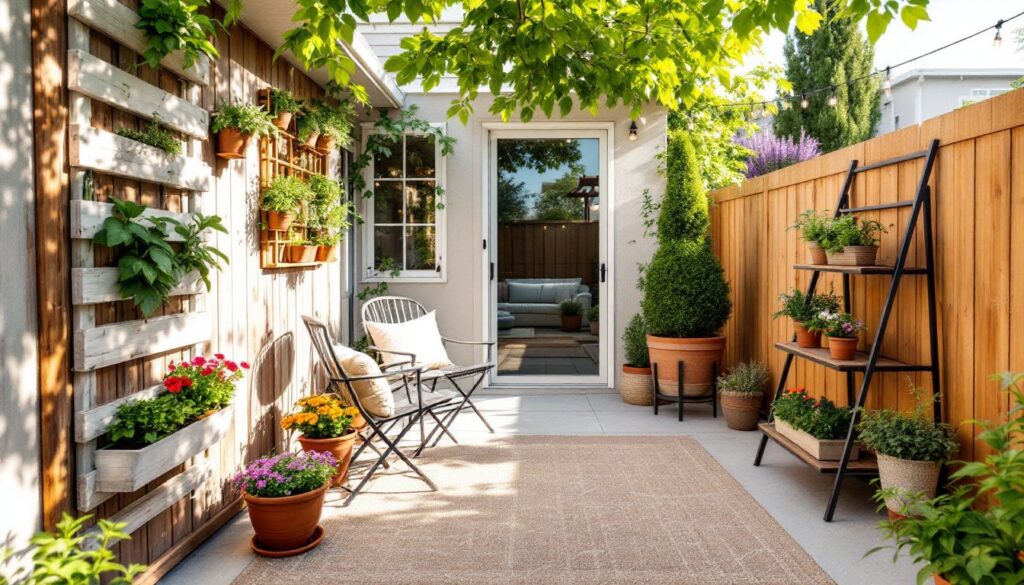
Wall-mounted planters attach directly to fences, siding, or masonry. Models range from pocket planters made of felt to modular plastic grids. Mount securely into studs or masonry anchors, soil and water add significant weight. A 4×4-foot vertical planter fully planted can exceed 50 pounds when saturated.
Trellises and lattice panels support climbing plants like clematis, jasmine, or edible peas and beans. Install them 2–3 inches off the wall to allow air circulation and prevent rot. Cedar or vinyl lattice holds up better than untreated pine in constant moisture.
Tiered plant stands turn corners into vertical gardens. Metal or wood shelving units designed for outdoor use can hold 6–12 pots in the same footprint as a single large container. Ensure the bottom tier has drainage or use saucers to protect flooring.
Hanging planters and baskets capitalize on overhead space. Use ceiling joists or install heavy-duty hooks rated for at least 35 pounds to support hanging baskets when wet. Self-watering varieties reduce maintenance for high-mounted plants.
Living walls (modular systems with built-in irrigation) are a premium option for renters or those wanting a statement piece. Expect to invest $150–$400 for a 3×3-foot system, plus ongoing water and fertilizer costs.
Regardless of system, use lightweight potting mix formulated for containers, not garden soil, which compacts and adds unnecessary weight.
Strategic Plant Selection for Compact Areas
Plant choice can make or break a small patio. The goal is visual interest without overcrowding or constant pruning.
Dwarf and compact cultivars offer the same aesthetic as full-sized varieties in a fraction of the space. Dwarf conifers, miniature roses, and compact hydrangeas stay manageable without aggressive shearing. Read the mature size on the tag, “slow-growing” doesn’t mean small.
Multi-season plants earn their footprint. Evergreens provide year-round structure. Shrubs like nandina or boxwood look good in all seasons and tolerate containers well. Ornamental grasses add movement and texture from spring through winter.
Edibles make practical use of limited space. Cherry tomatoes, herbs, peppers, and salad greens thrive in containers. A single 5-gallon pot can produce 10–15 pounds of tomatoes over a season. Herbs like basil, thyme, and parsley tolerate partial shade and fit on narrow ledges or shelves.
Vertical growers like pole beans, cucumbers, and vining squash take advantage of trellises. They produce more per square foot than bush varieties and keep fruit off the ground.
Avoid aggressive spreaders like mint (unless containerized), bamboo, or large ornamental grasses that require annual division. These consume space and create maintenance headaches.
Fragrance adds a sensory layer without visual bulk. Jasmine, lavender, and scented geraniums deliver aroma in compact forms. Place them near seating or pathways where they’ll be appreciated.
Match plants to light conditions. Most patios are partly shaded by structures or trees. Shade-tolerant options include hostas, ferns, impatiens, and coleus. Full-sun patios handle succulents, Mediterranean herbs, and sun-loving annuals.
Multi-Functional Furniture and Layout Ideas
Furniture in a small patio needs to work harder. Every piece should serve multiple purposes or be easy to relocate.
Storage benches provide seating while hiding cushions, tools, or grill accessories. Models with weather-resistant resin or cedar construction hold up better than particleboard. Look for units with at least 50-gallon capacity if storing bulky items.
Folding bistro sets can be collapsed and hung on wall hooks when not in use. Metal sets are more durable than wood but can get hot in direct sun, add cushions or choose powder-coated finishes.
Nesting tables offer surface area when needed and tuck away to free up circulation space. Side tables with built-in planters combine function and greenery.
Built-in seating along a fence or wall maximizes usable area. A simple 2×4 and 2×6 frame with pressure-treated lumber can be built for under $100 in materials. Add hinged lids for hidden storage.
Layout matters as much as furniture choice. In rectangular patios, align seating along the longest wall to preserve the sense of length. In square spaces, corner placement opens up the center. Avoid pushing all furniture against walls, floating a small seating area creates intimacy and makes the space feel designed, not leftover.
Rugs define zones and add color. Outdoor rugs made from polypropylene resist mold and fading. A 5×7-foot rug can anchor a seating area without overwhelming a small patio. Secure edges with rug tape to prevent tripping.
Leave at least 24 inches between furniture pieces for comfortable movement. If that’s not possible, choose furniture that’s easy to shift when access is needed.
Creating Depth and Illusion with Lighting and Mirrors
Strategic use of light and reflection tricks the eye into perceiving more space.
Mirrors are a classic designer move. Weather-resistant acrylic mirrors or mirrored panels create the illusion of depth when mounted on fences or walls. Position them to reflect greenery or sky, not clutter or trash bins. Secure with exterior-grade adhesive or rust-proof brackets. A 24×36-inch mirror can visually double a narrow patio.
Avoid angling mirrors to reflect direct sun, which can create uncomfortably bright glare or even pose a fire risk with focused beams.
Layered lighting extends usable hours and adds dimension. Combine three types:
- Ambient lighting (overhead string lights or a porch fixture) provides overall visibility.
- Task lighting (a spotlight over the grill or reading lamp by a chair) supports specific activities.
- Accent lighting (uplights on plants or wall sconces) highlights features and creates depth.
LED string lights draw minimal power and last 25,000+ hours. Choose warm white (2700–3000K) for a cozy feel. Daylight tones feel sterile outdoors. For permanent installations, run low-voltage landscape wire through conduit to protect from shovels and foot traffic. Battery-powered or solar options work for renters or spaces without outlets.
Uplighting placed at the base of a tall plant or along a fence draws the eye upward, emphasizing height. A couple of 4-watt LED spotlights can transform a flat wall into a dramatic backdrop.
Path lights along borders guide movement and make edges recede into shadow, which can make a patio feel larger than it is. Stake lights should be placed every 6–8 feet for even coverage.
Install lighting on a timer or smart switch for convenience. Dimmers allow adjustment based on activity, bright for cooking, soft for lounging.
Budget-Friendly Container Garden Arrangements
Container gardening is the most accessible option for small patios, and it doesn’t require expensive pots.
Repurposed containers cut costs. Galvanized buckets, wooden crates, old coolers, and even 5-gallon joint compound buckets work if drainage holes are drilled in the bottom. Use a 1/2-inch drill bit and add 4–6 holes per container. Avoid containers that previously held chemicals unless thoroughly cleaned.
Grouping containers in odd numbers (3, 5, or 7) looks more natural than pairs. Vary heights using plant stands, overturned pots, or stacked pavers. Clustering creates a lush, layered look even with fewer plants.
Thriller-filler-spiller is the classic container design formula:
- Thriller: A tall, focal plant in the center (ornamental grass, spike, or upright annual).
- Filler: Mid-height plants around the thriller (petunias, zinnias, or leafy greens).
- Spiller: Trailing plants that cascade over the edge (sweet potato vine, ivy, or trailing lobelia).
This approach works in containers as small as 12 inches across.
Self-watering containers reduce maintenance, especially for small spaces without hose access. They use a reservoir at the bottom to wick moisture as needed. Expect to pay $20–$60 depending on size, or DIY a version using nested buckets and a wicking fabric.
Soil matters. Use a quality potting mix (not topsoil), which drains well and resists compaction. Mixing in perlite or vermiculite improves aeration. For large containers, fill the bottom third with lightweight packing peanuts or empty plastic bottles to reduce soil volume and weight, roots don’t reach that deep anyway.
Color blocking with containers (painting or grouping same-colored pots) creates visual cohesion. Stick to two or three colors for a polished look without chaos.
Conclusion
Small patios demand intentional choices, but the payoff is outsized. By building upward, selecting compact plants, choosing furniture that multitasks, and using light and reflection strategically, even a modest slab can become a true outdoor room. The difference between a forgotten corner and a favorite retreat often comes down to a weekend’s work and a willingness to think vertically. Start with one or two ideas, test what works, and layer in elements over time.