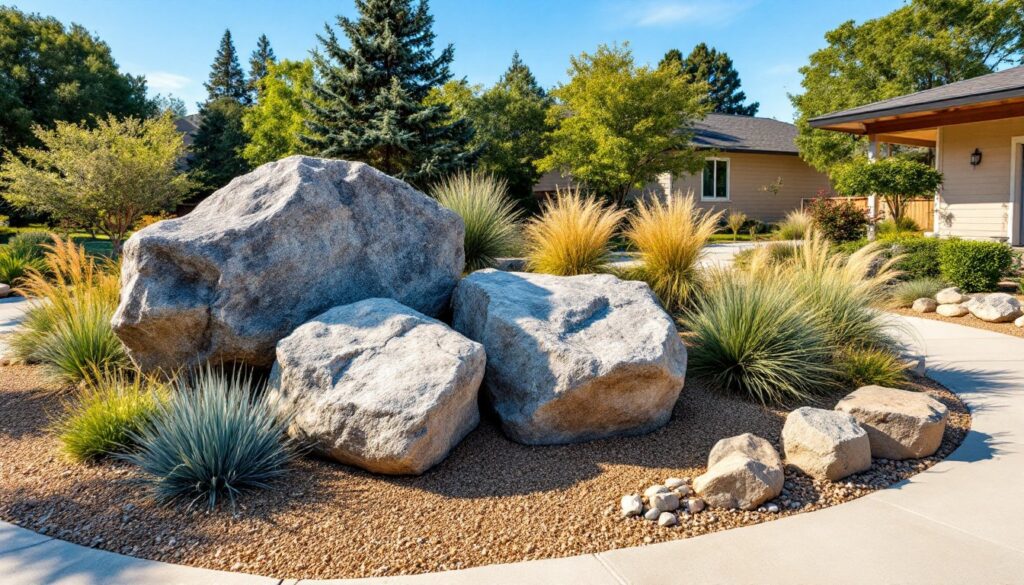
Front yard landscaping doesn’t have to rely on endless mulch beds and rows of shrubs. Large rocks, boulders, fieldstone, and slab rock, bring structure, texture, and year-round visual interest to a yard without the maintenance demands of traditional plantings. They anchor design elements, define spaces, and handle everything from drainage problems to erosion control. For homeowners looking to create curb appeal that holds up through every season, rock landscaping delivers both function and style with relatively low upkeep once installed.
Table of Contents
ToggleKey Takeaways
- Front yard landscaping with large rocks eliminates maintenance demands of traditional plantings while providing year-round visual interest, drainage solutions, and erosion control.
- Strategic placement of boulders—flanking entries, anchoring corners, or defining borders—creates intentional design when grouped in odd numbers and partially buried to look natural.
- Pair large rocks with low-water perennials, ornamental grasses, and proper gravel or mulch surroundings to complete the design without overshadowing the stone features.
- Large rock installation requires proper equipment (dolly, pry bar, or mini excavator rental for stones over 300 pounds) and site preparation with shallow excavation to anchor rocks safely and visually.
- Rock landscapes age gracefully with minimal upkeep beyond occasional weeding, gravel refreshing every 2–3 years, and annual plant trimming to maintain the hardscape’s appearance and functionality.
Why Large Rocks Are a Game-Changer for Front Yard Landscaping
Large rocks solve practical problems while adding dramatic focal points. In areas with poor drainage or slopes prone to erosion, strategically placed boulders slow water flow and prevent soil washout, especially when combined with proper grading and landscape fabric. Unlike wooden retaining walls or edging that rot over time, stone is permanent.
From a design standpoint, rocks create visual weight that grounds a landscape. A single 3–5 foot boulder can anchor a corner bed or flank an entryway with more impact than a dozen small plantings. They work in nearly every style, from modern minimalist yards with clean gravel and ornamental grasses to cottage gardens where moss-covered fieldstone adds rustic charm.
Maintenance is minimal. There’s no watering, no pruning, and no seasonal replacement. Rocks don’t blow away in storms, attract pests, or fade in UV exposure. For homeowners in drought-prone regions or anyone tired of weekend yard work, that’s a significant advantage. They also pair well with xeriscaping principles, reducing turf and water use without sacrificing visual interest. During larger landscaping projects, portable toilets rental services can provide convenient temporary restroom facilities for crews working on the property.
Choosing the Right Large Rocks for Your Front Yard
Not all rocks are created equal. The right choice depends on the yard’s style, local availability, and the specific role the stone will play.
Rock Types and Their Aesthetic Impact
Boulders are the most versatile. These rounded or irregular stones typically range from 1 to 6 feet in diameter. River rock boulders have smooth, water-worn surfaces and work well in natural or Asian-inspired designs. Angular boulders, often granite or limestone, suit contemporary layouts or rustic mountain aesthetics.
Fieldstone consists of smaller, flat or irregularly shaped stones collected from fields or riverbeds. While individual pieces are manageable (often 50–200 pounds), they’re effective when stacked or clustered. Fieldstone blends into informal cottage or farmhouse designs.
Slab rock or flagstone offers flat, plate-like pieces. Though typically used for patios or pathways, large slabs can be set vertically or at angles for sculptural impact in modern yards.
Lava rock is lightweight and porous with a rough, textured surface. It comes in reds, blacks, and browns. Because it’s lighter than granite or limestone, it’s easier to position, but it can look out of place in regions where it’s not native.
Color matters. Grays and tans are neutral and blend with most plant palettes. Reds and blacks make bold statements but can clash if the home’s exterior or hardscaping doesn’t support them. Visit a landscape supply yard to see full-size samples rather than relying on online photos, rock color shifts dramatically in different light.
Strategic Placement Ideas for Maximum Impact
Placement determines whether rocks look intentional or like they were dumped by a glacier.
Flanking entries or driveways: Position one large boulder (or a cluster of two to three) on each side of a driveway entrance or walkway. This frames the approach and signals transition from public sidewalk to private property. Bury the base one-quarter to one-third of the rock’s height to make it look natural, not perched.
Corner focal points: Front yard corners often become dead zones. A boulder grouping with low grasses or succulents turns that wasted space into an intentional feature. Use odd-numbered groupings, three or five rocks, with varied sizes for visual rhythm.
Retaining slopes: On a sloped front yard, embed large rocks into the hillside to create natural-looking tiers. Combine them with deep-rooted groundcovers like creeping juniper or sedum to stabilize soil. For slopes steeper than 3:1, consult a landscape professional, improper rock placement won’t prevent erosion and can become a safety hazard.
Border definition: Use a line of medium to large rocks (18–36 inches) to separate planting beds from turf or gravel areas. This is more durable than plastic edging and adds dimension.
Water features or dry creek beds: If the yard has a natural drainage swale, line it with river rock boulders to create a dry creek bed. During rain, it channels water: the rest of the time, it’s a textural feature. Add smooth river cobbles (3–6 inches) between the larger stones for a layered look.
Avoid scattering rocks randomly across the yard. Groupings and deliberate lines read as design: isolation reads as leftover debris.
Designing Around Large Rocks: Plants, Gravel, and Lighting
Rocks are anchors, not islands. The right companions complete the design.
Plant pairings: Low-water perennials and ornamental grasses soften hard stone edges. Blue fescue, Mexican feather grass, and fountain grass offer movement. Sedums, hens-and-chicks, and creeping thyme spill over rock bases. For height, use yucca, agave, or dwarf conifers, they share the rock’s drought tolerance and bold form.
Avoid planting large shrubs directly against boulders. Roots can shift stones over time, and overgrown shrubs hide the rock entirely. Leave at least 12–18 inches of clearance.
Gravel and mulch: Surround rocks with decomposed granite, pea gravel, or river rock in 1–3 inch sizes. This creates color contrast and reduces weed pressure. Skip dyed mulch, it fades and clashes with natural stone. If organic mulch is preferred, use shredded bark or natural hardwood, refreshed annually.
Install landscape fabric beneath gravel to suppress weeds, but don’t rely on it alone. Windblown seeds and organic debris will eventually create a thin soil layer on top. Plan on light weeding and occasional top-dressing.
Lighting: Uplighting boulders at night creates dramatic shadows and highlights texture. Use low-voltage LED spotlights (3–5 watts) positioned 12–24 inches from the rock base. Aim the beam upward at a 30–45 degree angle. For pathway rocks, consider small bollard lights or recessed step lights to improve safety and add ambiance.
Keep the overall palette simple. Too many rock types, gravel colors, or plant varieties create visual clutter. Stick to two or three complementary materials.
Installation Tips and Cost Considerations
Large rocks are heavy, often 100 to 1,000+ pounds. Installation requires planning, equipment, and sometimes help.
Delivery and equipment: Landscape suppliers deliver boulders and can often place them roughly with a boom truck or skid steer for an added fee. Precise positioning may require a landscape dolly, pry bar, and blocking. For rocks over 300 pounds, a skid steer or mini excavator rental ($150–$300 per day) is the safer route. Hand-moving large stones without proper technique risks serious back injury.
Site prep: Mark placement with spray paint. Excavate a shallow depression for each rock, burying one-quarter to one-third anchors it visually and physically. Remove sod and roots, then backfill around the rock base with native soil, tamping firmly. Tilt the rock slightly backward if it’s on a slope to prevent forward rolling.
Drainage and erosion: If rocks are part of a drainage solution, ensure they don’t create dams. Allow gaps for water flow and grade soil away from the home’s foundation. For erosion control, combine rocks with filter fabric and backfill gravel.
Permits and codes: Most decorative rock placement doesn’t require permits. But, if rocks are part of a retaining wall over 4 feet in height or affect drainage onto neighboring properties, local codes may apply. Check with the building department before large-scale projects.
Cost breakdown: Prices vary by region, rock type, and supplier. Expect:
- Boulders: $100–$600 per ton (a large accent boulder is often 1–3 tons)
- Fieldstone: $200–$400 per ton
- Delivery: $75–$200+ depending on distance and load size
- Equipment rental: $150–$300 per day if self-installing
- Professional installation: $50–$100 per hour for labor, or $300–$1,200+ for a full front yard design and install
Buying locally sourced stone saves on freight and tends to blend better with the regional landscape.
Maintenance and Long-Term Care for Rock Landscaping
Once in place, rock landscapes require far less attention than traditional beds, but they’re not zero-maintenance.
Weed control: Even with landscape fabric, weeds will sprout in gravel and around rock bases. Hand-pull when small, or spot-treat with a post-emergent herbicide safe for ornamental beds. Avoid pre-emergents if planting annuals or perennials nearby.
Moss and algae: In shaded or damp climates, moss and algae can grow on rock surfaces. Some homeowners embrace the aged look: others prefer clean stone. A stiff brush and diluted white vinegar solution (1 part vinegar to 3 parts water) removes buildup. Pressure washers work but can damage softer stones like sandstone.
Gravel refreshing: Foot traffic and weather compact and displace gravel. Top-dress with a fresh 1-inch layer every 2–3 years to maintain coverage and appearance.
Settling and shifting: Freeze-thaw cycles and soil movement can shift rocks over time, especially on slopes. Inspect annually and reposition as needed using a pry bar or dolly. If a large rock has shifted significantly, it may need re-excavation and proper anchoring.
Plant trimming: Keep surrounding plants in check. Overgrowth hides the stone and traps moisture against the rock, which can promote algae. Trim ornamental grasses and groundcovers annually in late winter.
Rock landscaping ages gracefully. Weathering adds character, lichen, subtle color shifts, and minor settling all contribute to a naturalized look that improves over time rather than deteriorating like wood or metal.