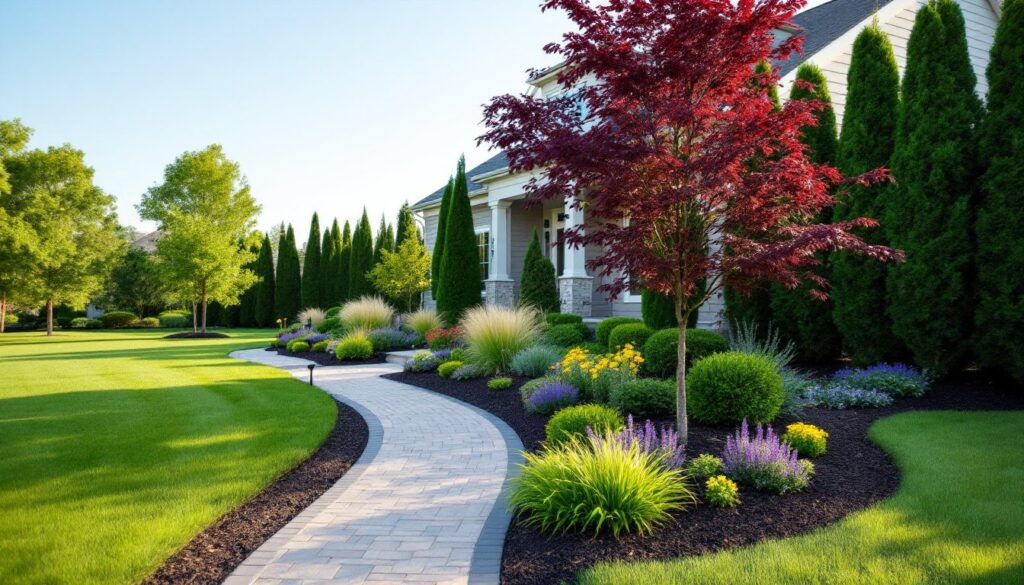
A well-designed front yard does more than just look good, it sets the tone for the entire property and can boost home value by up to 15%. Whether working with a blank slate or refreshing an existing landscape, homeowners need a clear plan that balances aesthetics, maintenance, and budget. The best front yard designs layer texture, height, and focal points while accounting for sun exposure, drainage, and local climate. This guide covers proven landscaping strategies that deliver professional results without requiring a landscape architect. From foundation plantings to pathway materials and outdoor lighting placement, these ideas work for properties ranging from compact suburban lots to sprawling country settings.
Table of Contents
ToggleKey Takeaways
- Strategic landscaping ideas for the front yard can boost home value by up to 15% while establishing clear visual hierarchy through layered plants, textures, and focal points.
- Design pathways at least 48 inches wide with durable materials like poured concrete ($6–12/sq ft), pavers ($12–20/sq ft), or flagstone ($18–30/sq ft) and add landscape lighting every 8–10 feet for safety and curb appeal.
- Foundation plantings should follow a three-tier approach: evergreen shrubs close to the house, ornamental grasses or perennials in the mid-layer, and ground covers at borders to create year-round visual interest.
- Use 2–3 inches of hardwood or cedar mulch annually and choose ground covers like creeping thyme or ajuga over traditional turfgrass to reduce maintenance in front beds.
- Install focal points such as specimen trees, water features, or boulders off-center from the front door, positioned where they’re visible from the street, to anchor the overall design.
- Implement low-voltage LED lighting systems (12V) with path lights, uplights, and downlights to extend functionality after dark while keeping installation DIY-friendly and energy-efficient.
Create a Stunning Foundation with Strategic Plant Layering
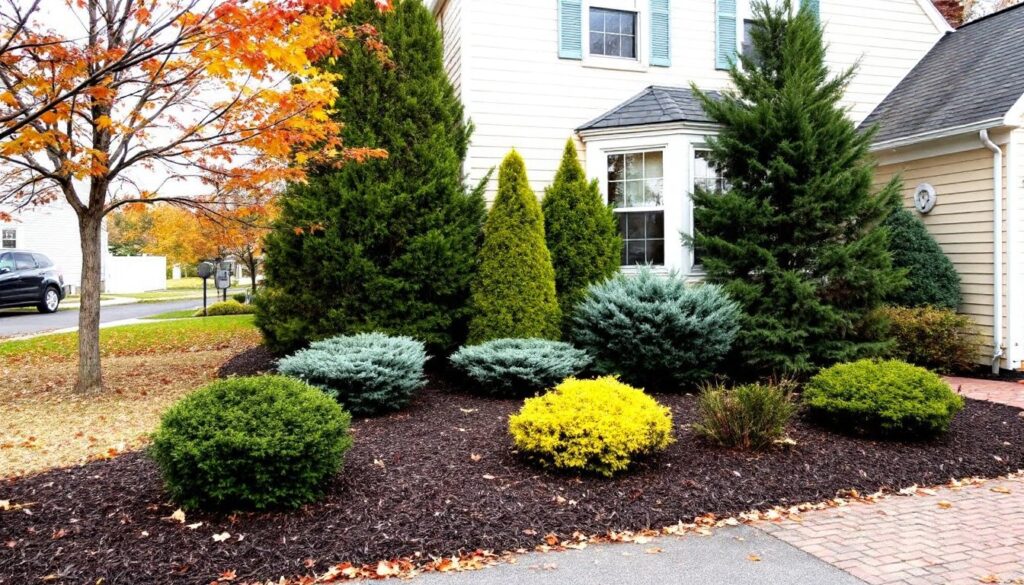
Foundation plantings anchor a home visually and create depth when layered by height. Start with evergreen shrubs closest to the house, boxwoods, yews, or dwarf Alberta spruces provide year-round structure and typically reach 3-4 feet at maturity. Position them 2-3 feet from the foundation to allow air circulation and prevent moisture damage.
Add a mid-layer of ornamental grasses or flowering perennials 4-6 feet out. Varieties like fountain grass, Russian sage, or black-eyed Susans introduce movement and seasonal color while requiring minimal water once established. Space plantings according to their mature spread, not their nursery size, most DIYers plant too densely and end up hacking back overgrowth within two seasons.
Finish with low-growing ground covers or edging plants along borders. Creeping phlox, sedum, or sweet alyssum soften hardscape edges and suppress weeds. This three-tier approach creates visual interest from multiple angles and ensures something’s always in bloom or showing foliage.
Sun exposure matters. South and west-facing foundations get intense afternoon heat, choose drought-tolerant species like lavender or salvia. North-facing beds stay cooler and shadier: hostas, ferns, and coral bells thrive there. Amend soil with 2-3 inches of compost before planting to improve drainage and nutrient content, especially in compacted builder’s clay.
Design a Welcoming Pathway That Makes a Statement
A front walkway should be at least 48 inches wide to allow two people to walk side-by-side comfortably and meet ADA guidelines if accessibility is a priority. Narrow 36-inch paths feel cramped and can limit resale appeal.
Material choice drives both budget and maintenance. Poured concrete is the most affordable option at $6-12 per square foot installed, lasts decades, and handles freeze-thaw cycles well when properly reinforced with rebar or wire mesh. Stamped or stained concrete adds visual interest for an additional $2-4 per square foot.
Pavers, brick, concrete, or natural stone, offer more design flexibility and easier repairs if a section settles. Expect $12-20 per square foot installed. Use polymeric sand in the joints instead of regular play sand: it hardens when wet and resists weed growth and ant colonies. Lay pavers on 4-6 inches of compacted gravel base with 1 inch of leveling sand on top. Skipping the gravel leads to settling and uneven surfaces within a year.
Flagstone or bluestone delivers high-end appeal at $18-30 per square foot. These irregular pieces require more skill to fit together, rent a wet saw for clean cuts and wear safety goggles and a dust mask when cutting.
Edge pathways with steel, aluminum, or composite edging to prevent lateral spread. Plastic edging looks cheap and frost-heaves out of position. Add landscape lighting along the path edges (covered in detail later) for safety and nighttime curb appeal.
Add Visual Interest with Focal Points and Outdoor Features
Every front yard needs at least one focal point that draws the eye and anchors the design. Common options include a specimen tree, a water feature, decorative boulders, or a piece of garden art.
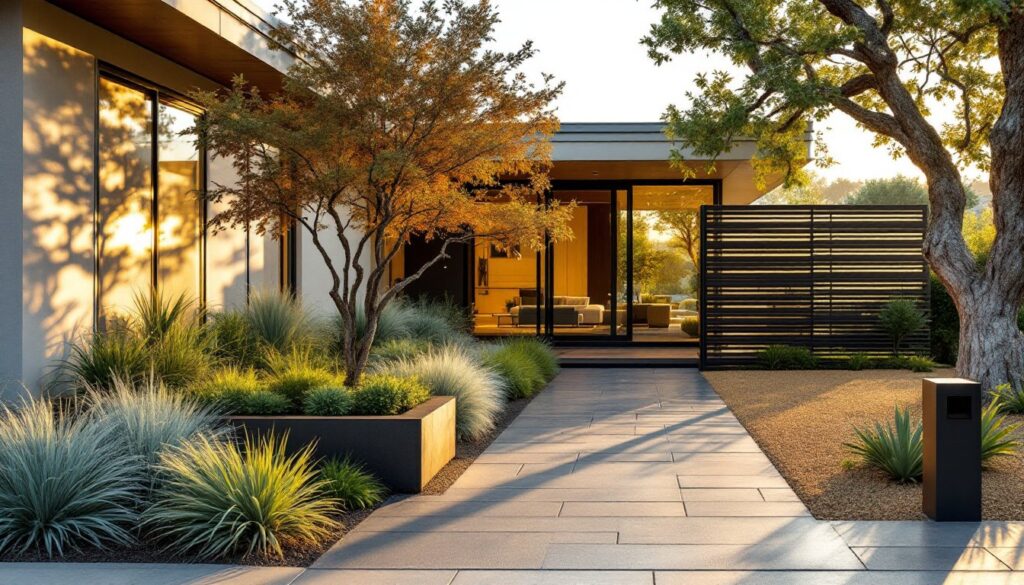
Specimen trees work well in larger yards. Japanese maples, flowering dogwoods, or ornamental cherries provide seasonal color and mature to 15-25 feet, tall enough to create presence without overwhelming a single-story home. Plant them off-center from the front door, typically 10-15 feet out, so they frame the entrance rather than block it. Avoid planting directly over sewer lines, septic fields, or utility easements.
Water features add sound and movement but require electrical work and regular maintenance. A simple bubbling urn or wall-mounted fountain needs a 120V GFCI-protected outlet installed by a licensed electrician, don’t run extension cords across the yard. Recirculating pumps use 50-150 watts, adding roughly $5-10 per month to the electric bill if run continuously.
Boulders and natural stone create instant maturity and work in modern, rustic, or xeriscape designs. A single 3-4 foot boulder costs $200-600 depending on type and region, plus delivery. Bury the bottom third to make it look natural, not like it was dropped from a truck.
Garden art, birdbaths, sculptures, arbors, personalizes the space. Avoid vinyl or resin pieces that fade and crack: choose metal, stone, or treated wood that ages well. Position focal points where they’re visible from the street and the front door.
Incorporate Low-Maintenance Ground Covers and Mulching
Traditional turfgrass requires mowing, edging, fertilizing, and watering, fine for backyards, but high-maintenance for front beds. Ground covers reduce labor while adding texture and controlling erosion on slopes.
Perennial ground covers like creeping thyme, ajuga, or pachysandra spread to fill bare soil and suppress weeds. They’re ideal for areas where foot traffic is minimal. Plant plugs or 4-inch pots on 8-12 inch centers: they’ll fill in within one to two growing seasons. Mulch between new plantings to prevent weeds while they establish.
Mulch is critical for moisture retention, temperature regulation, and weed suppression. Apply 2-3 inches of shredded hardwood, pine bark, or cedar mulch in beds annually. Double-shredded products break down slower and stay in place better than single-shred. Avoid piling mulch against plant stems or tree trunks, leave a 2-3 inch gap to prevent rot and pest issues.
Rubber mulch is sometimes marketed for landscaping but belongs on playgrounds, not gardens, it doesn’t improve soil, can leach chemicals, and looks artificial. Similarly, landscape fabric under mulch is oversold: it prevents organic matter from enriching the soil and becomes a tangled mess when plant roots grow into it. A thick mulch layer alone handles most weed issues.
For a modern look, gravel or river rock works well in arid climates or contemporary designs. Use landscape fabric or weed barrier underneath inorganic mulches only, and expect to rinse dust and debris off rock annually. At 2-3 inches deep, a cubic yard covers roughly 100-120 square feet.
Enhance Privacy and Structure with Borders and Hedges
Even small front yards benefit from defined borders that separate lawn from beds and public sidewalks from private space. Hedges provide living walls that offer privacy, wind protection, and noise buffering.
Boxwood, privet, or arborvitae are classic hedge plants. For a formal look, space them 18-24 inches apart and shear twice per year, once in late spring after new growth hardens, again in mid-summer. For informal hedges that require less pruning, space plants at their mature width and let them grow naturally.
Arborvitae like ‘Green Giant’ or ‘Emerald’ grow quickly (2-3 feet per year when young) and reach 12-20 feet, making them ideal for blocking sightlines or ugly views. They need full sun and well-drained soil, standing water kills them. Plant in a staggered double row for a denser screen.
Horizontal borders can be created with metal, stone, brick, or composite edging. Steel edging ($3-5 per linear foot) is nearly invisible, durable, and holds clean lines. Brick or stone set in a shallow trench offers a traditional look but requires more labor to install level. Edge beds along driveways and walkways to prevent mulch and soil from spilling onto hardscape.
Don’t plant hedges within utility easements or sightline triangles near driveways, most municipalities require clear sightlines 10-15 feet back from intersections. Check local codes before installing screening near streets.
Illuminate Your Landscape with Strategic Outdoor Lighting
Outdoor lighting extends usability after dark, improves safety, and highlights landscape features. A basic front yard system includes path lights, uplights, and downlights.
Low-voltage LED systems (12V) are the DIY-friendly standard. They’re safer than 120V line voltage, use less energy, and don’t require conduit burial in most jurisdictions, check local electrical codes. A transformer steps household current down to 12V: size it to handle 80% of total wattage to avoid overloading. For example, ten 3-watt fixtures need a transformer rated for at least 38 watts (30W ÷ 0.8).
Run 12- or 14-gauge landscape wire from the transformer to fixtures. Bury cable 6-8 inches deep or run it under mulch if allowed locally. Use waterproof wire connectors, not twist caps, at each fixture.
Path lights spaced every 8-10 feet along walkways prevent tripping hazards and guide guests. Choose fixtures with shielded bulbs that direct light downward to avoid glare. Uplights positioned at the base of trees or architectural features create dramatic shadows and depth. Angle them 30-45 degrees and use 3-5 watt LEDs to avoid harsh spotlighting.
Solar lights are tempting for their no-wire installation, but most budget models ($10-20 each) produce weak light and fail within two seasons. If going solar, invest in commercial-grade units with replaceable batteries.
Use a photocell or timer to automate the system. Timers offer more control and prevent lights from staying on during overcast days when photocells can misfire. Clean fixtures and trim back plants annually so light output stays strong.
Conclusion
Front yard landscaping doesn’t require a contractor or a five-figure budget, it needs a solid plan, quality materials, and honest effort. Layer plants by height, choose pathways that fit the home’s style and budget, and install lighting that makes the space functional after sunset. Mulch properly, define borders, and pick ground covers that reduce long-term maintenance. These fundamentals deliver curb appeal that lasts and grows better with each season.