Corner lots pack double the street exposure, and double the landscaping challenge. Unlike standard front yards tucked behind a single sidewalk, corner properties face traffic from two directions, often with awkward angles, utility boxes, and sight-line requirements that complicate design. The upside? Twice the opportunity to make an impression. Smart corner landscaping turns those odd triangular beds and exposed sides into cohesive focal points that boost curb appeal and property value. This guide walks through practical strategies for layering plants, adding hardscape anchors, ensuring privacy, and keeping maintenance realistic, all tailored to the unique demands of corner lots.
Table of Contents
ToggleKey Takeaways
- Front yard corner landscaping requires strategic planning due to double street exposure, sight-line regulations (typically 30 inches height limit), and utility access challenges that standard yards don’t face.
- Layered plantings with a specimen tree anchor, mid-height shrubs, and low perennials create dimensional focal points visible from both street angles and boost curb appeal.
- Native plants, drip irrigation systems, and groundcovers significantly reduce maintenance demands on corner lots, which have higher upkeep requirements than typical front yards.
- Strategic screening using evergreen hedges, berms, or fencing combined with climbing vines balances privacy needs while maintaining the welcoming street presence that corner properties demand.
- Hard-scape elements like edging, decorative stone, and pathway pavers define beds and create clean transitions while reducing long-term maintenance in high-visibility corner areas.
- Year-round interest through layered bloom times—spring bulbs, summer perennials, fall foliage, and winter evergreens—keeps corner landscaping visually appealing across all seasons.
Why Corner Lots Require Special Landscaping Attention
Corner properties face visibility from multiple angles, which means every plant choice and hardscape element shows from at least two street perspectives. This dual exposure increases maintenance demands, more sidewalk frontage means more edging, more mowing, and more weeds.
Sight-line regulations also complicate corner lot landscaping. Most municipalities enforce clear vision zones at intersections, typically requiring plants and structures to stay below 30 inches in height within a triangular area extending 10–25 feet from the curb intersection. Violating these codes risks fines and forced removal. Check local ordinances before installing tall shrubs or fencing near corners.
Utility access presents another hurdle. Corner lots often host sidewalk cuts, fire hydrants, utility meters, and irrigation backflow preventers in prominent spots. Screening these eyesores without blocking service access requires strategic plant placement and hardscape solutions like decorative screens or low stone walls.
Finally, corner lots typically have less usable backyard space, pushing more functional outdoor living toward the front. Landscaping must balance curb appeal with privacy, creating welcoming street presence while shielding patios or play areas from constant public view.
Create a Stunning Focal Point with Layered Plantings
Layered plantings turn flat corner beds into dimensional showcases. The classic approach stacks plant heights in tiers: tall anchor plants in back (or center for island beds), mid-height shrubs in the middle, and low groundcovers or perennials in front. This creates depth visible from both street angles.
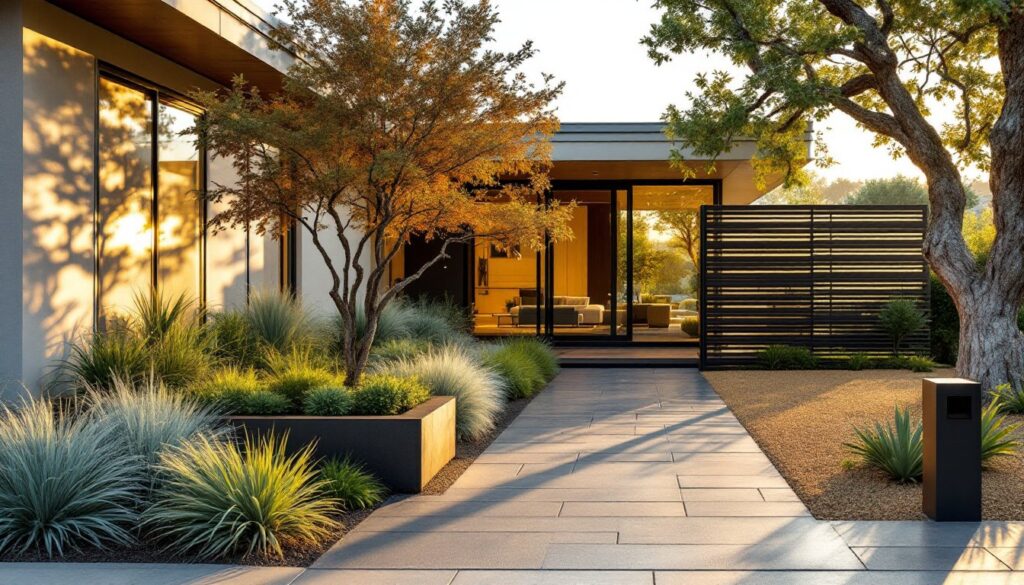
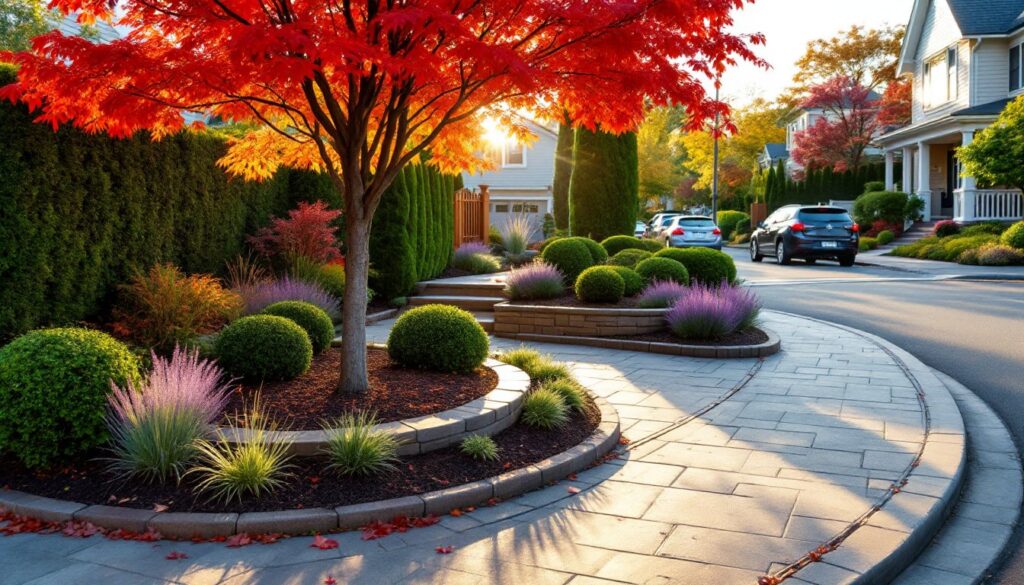
For corner beds, start with a specimen tree as the anchor, something with year-round structure like a Japanese maple (Acer palmatum), serviceberry (Amelanchier), or ornamental pear. Position it off-center to avoid blocking sight lines, typically 8–12 feet back from the curb intersection. Specimen trees should mature to 12–20 feet to fit residential scale without overwhelming the lot.
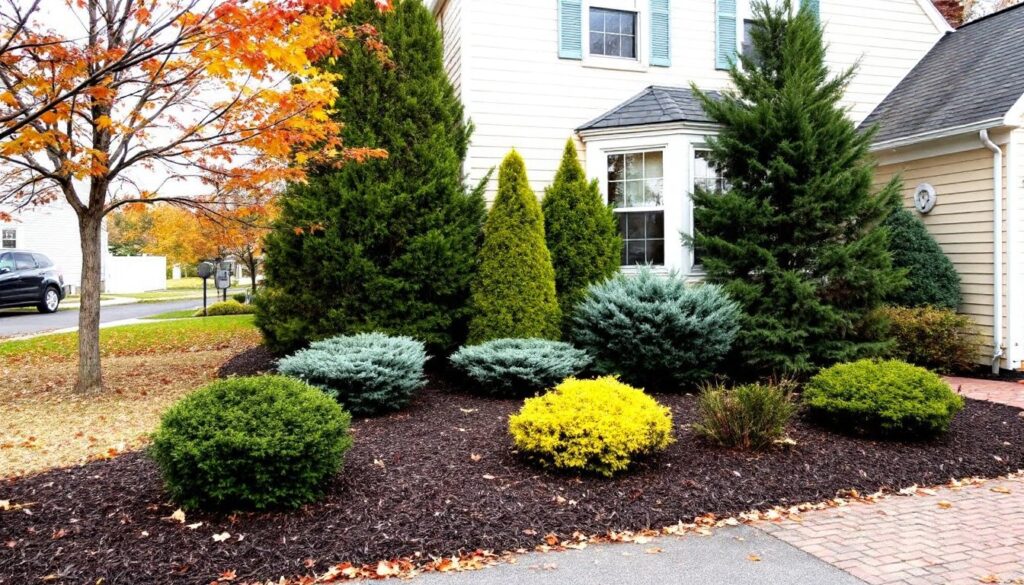
Surround the tree with mid-height shrubs in groups of three or five for natural rhythm. Evergreens like boxwood (Buxus) or inkberry holly (Ilex glabra) provide structure, while deciduous options like hydrangea or spirea add seasonal blooms. Keep mature heights between 3–5 feet to stay below fence lines and maintain street visibility.
Edge beds with low perennials and ornamental grasses, lavender, catmint (Nepeta), or fountain grass (Pennisetum). These soften hardscape edges and extend bloom times. Plant in sweeping drifts rather than single specimens to create flow around the corner.
Mulch depth matters: Apply 2–3 inches of shredded hardwood or pine bark to suppress weeds and retain moisture. Avoid volcano mulching around tree trunks, pull mulch back 3–4 inches from the base to prevent rot.
Design Strategies for Corner Yard Privacy and Screening
Corner lots struggle with privacy since two street faces mean more passersby and headlight glare. Strategic screening balances openness with seclusion.
Evergreen hedges planted just inside property lines create year-round buffers. Arborvitae (Thuja), skip laurel (Prunus laurocerasus), or Nellie Stevens holly work well in zones 5–9, growing 6–10 feet tall with regular trimming. Space plants 3–4 feet apart for dense screening within three years. Check setback requirements, many jurisdictions require hedges to sit 3–5 feet inside the property line.
For faster privacy, install a fence along the side street where codes allow. Most areas permit 4-foot fences in front yards and 6-foot fences along side property lines. Horizontal slat fences or board-on-board styles offer modern curb appeal while blocking views. Pair fencing with climbing vines like clematis or climbing hydrangea to soften the structure.
Berm planting adds privacy without hard barriers. Build a low earthen mound (2–3 feet high) along the side street, then plant with mixed evergreens and grasses. Berms improve drainage and create elevation changes that add visual interest. Use excavated soil from patio or walkway projects to build berms and save on fill dirt costs.
For utility box screening, try a three-sided decorative screen made from lattice panels or cedar slats. Leave the service side open for meter readers. Plant low shrubs like dwarf yaupon holly or compact nandina in front to further disguise the box without blocking access.
Hardscape Elements That Anchor Corner Landscapes
Hardscaping provides structure and reduces maintenance in high-visibility corner areas. Well-placed stone, pavers, and edging define beds and create clean transitions.
Decorative stone or river rock works well in corner beds where foot traffic is low but visual impact is high. A 2–3 inch layer over landscape fabric suppresses weeds and provides contrast against plantings. Avoid small pea gravel near sidewalks, it migrates onto pavement and gets tracked indoors.
Edging is non-negotiable for clean corner beds. Steel or aluminum edging provides crisp lines and lasts 20+ years. Install it with the top edge slightly below grade so mower wheels ride over it without catching. Plastic edging works for budget projects but degrades in UV exposure within 5–7 years.
For corner properties with sloped yards, add a low retaining wall (12–24 inches high) using natural stone or concrete block. Walls below 2 feet typically don’t require engineering in most jurisdictions, but check local codes. Backfill with gravel for drainage and cap with plantings to soften the structure.
Pathway pavers leading from the sidewalk to the front door create intentional flow and reduce lawn wear. Use flagstone, brick, or concrete pavers set in sand or mortar. A 3–4 foot wide path accommodates two people walking side-by-side. Curved paths feel more natural than rigid straight lines on corner lots.
Consider a dry creek bed if drainage is an issue. Line a shallow swale with river rock and edge with larger boulders. Plant moisture-tolerant grasses or sedges along the edges. This directs runoff while adding a natural focal point visible from both streets.
Low-Maintenance Corner Landscaping Solutions
Corner lots demand more upkeep than standard yards, so design choices should minimize labor.
Native plants reduce watering, fertilizing, and pest control. Regional natives like black-eyed Susan (Rudbeckia), coneflower (Echinacea), or switchgrass (Panicum virgatum) thrive without amendment once established. They also support local pollinators, a growing consideration in many HOA guidelines.
Drip irrigation saves time and water compared to hand-watering or sprinklers. Install a timer-controlled system with zones for different plant types. Run ½-inch drip tubing along beds with emitters every 12–18 inches. Mulch over tubing to hide it and reduce evaporation. A basic drip system for a 300-square-foot corner bed costs $150–$250 in materials and installs in a weekend.
Groundcovers eliminate mowing and edging in hard-to-reach corners. Creeping thyme (Thymus serpyllum), creeping phlox, or ajuga spread quickly and tolerate light foot traffic. These work especially well in parkway strips (the space between sidewalk and street) where mowing is awkward.
Replace high-maintenance annuals with perennials and ornamental grasses that return year after year. Daylilies, hostas (for shade), and sedges require little more than spring cleanup. Ornamental grasses like feather reed grass (Calamagrostis) add movement and texture with zero deadheading.
Mulch beds generously to suppress weeds. Refresh mulch annually in spring, adding 1–2 inches to maintain depth. Shredded hardwood mulch breaks down slower than pine bark and stays in place better on slopes.
Seasonal Color and Year-Round Interest for Corner Yards
Corner landscaping stays in the public eye every season, so plan for year-round appeal.
Spring color comes from bulbs and early perennials. Plant drifts of daffodils, tulips, or alliums in fall for spring blooms. Mix in early perennials like creeping phlox, bleeding heart, or hellebores for extended color. Bulbs naturalize over time, returning with little effort.
For summer interest, rely on repeat bloomers like roses, daylilies, and coneflowers. Ornamental grasses like maiden grass (Miscanthus) add texture and movement. Choose drought-tolerant options if irrigation is limited, salvia, yarrow, and Russian sage thrive in heat with minimal water.
Fall brings foliage color and late blooms. Plant asters, sedum, and ornamental kale for September and October interest. Trees like red maple or sweetgum provide bold leaf color. Ornamental grasses turn golden and hold their shape through early winter, adding structure when perennials die back.
In winter, evergreens and hardscape carry the design. Boxwood, holly, and arborvitae provide green mass. Add deciduous shrubs with interesting bark, red twig dogwood (Cornus sericea) or river birch, for texture. Decorative planters near the entry with evergreen boughs or winter pansies maintain a finished look when beds are dormant.
Layer bloom times so something always shows. A corner bed with spring bulbs, summer perennials, fall asters, and evergreen structure delivers curb appeal in every season without constant replanting.
Conclusion
Corner lot landscaping demands more planning than typical front yards, but the payoff is substantial. Layered plantings, strategic hardscaping, and low-maintenance plant choices turn challenging dual-street exposure into a cohesive design asset. Focus on sight-line compliance, year-round interest, and realistic upkeep to create a corner landscape that enhances curb appeal without becoming a weekend burden.