A well-designed pool area goes beyond the water itself. The landscaping, hardscaping, and lighting choices around a backyard pool determine whether it feels like a resort escape or just a hole filled with chlorine. Thoughtful design transforms the space into a functional, attractive area that handles wet feet, intense sun, and constant use. From strategic plantings that block sightlines to durable decking that won’t blister bare feet, every element serves a purpose. This guide covers practical backyard landscaping ideas that elevate pool surroundings while keeping maintenance realistic and safety front of mind.
Table of Contents
ToggleKey Takeaways
- Strategic plantings like evergreen hedges and ornamental grasses provide natural privacy around pool areas while maintaining a 3-foot setback minimum to protect plants from chlorinated water.
- Backyard landscaping ideas with pool success depends on selecting appropriate decking materials—textured concrete, pavers, or natural stone—each with distinct drainage, heat reflection, and maintenance requirements.
- LED path and uplighting enhances safety and ambiance while complying with NEC Article 680, with most 20×40-foot pool areas needing 8-12 path lights and 2-4 uplights for balanced illumination.
- Choose low-maintenance poolside plants like agave, yucca, lantana, and dwarf palms that tolerate chlorine spray and reflected heat while avoiding heavy seed-drop species that clog pool filters.
- Outdoor living spaces require adequate square footage (10×12-foot minimum for pergolas), proper drainage sloping away from the pool, and functional zones 8-10 feet from pool edges for dry seating areas.
- Water features and fire elements add visual interest and focal points but require compliance with safety codes—fire pits must maintain 15-20 feet minimum distance from pools and check local permit requirements.
Creating Natural Privacy with Strategic Plantings
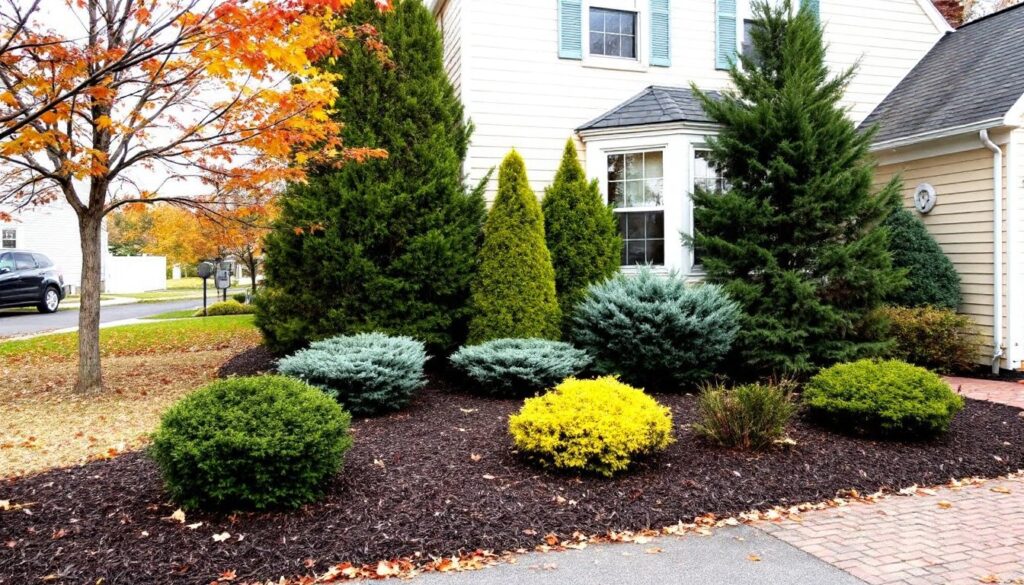
Privacy around a pool area doesn’t require an eight-foot fence. Strategic plantings create natural screens that soften harsh boundaries while blocking views from neighboring properties.
Evergreen hedges like arborvitae (Thuja species) or skip laurel (Prunus laurocerasus) provide year-round coverage. Plant them 3-4 feet apart for a solid screen within two growing seasons. Expect mature heights of 10-15 feet for most arborvitae varieties, making them ideal along property lines. They tolerate pruning well, so height control isn’t difficult.
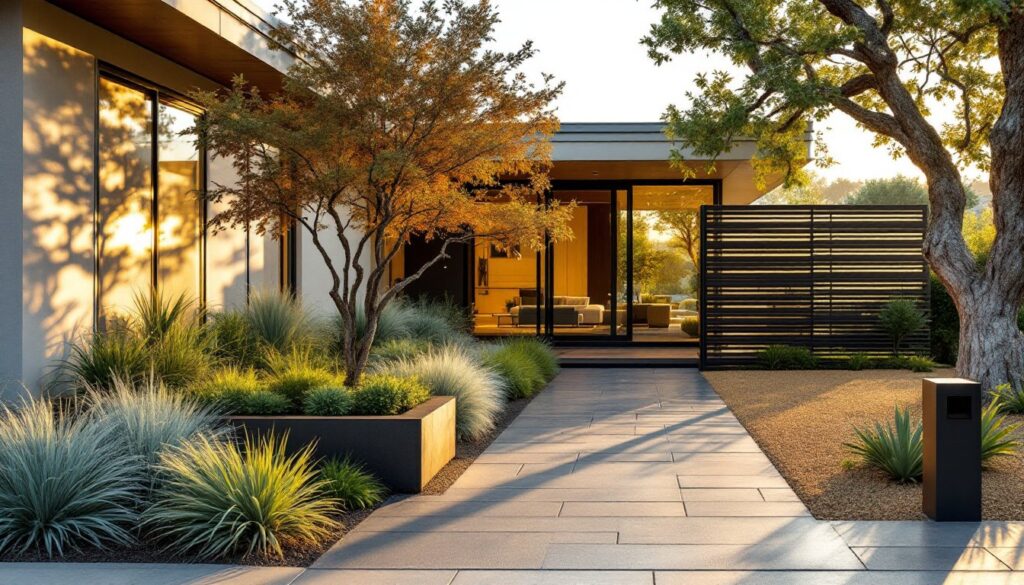
Ornamental grasses such as maiden grass (Miscanthus sinensis) or bamboo muhly work for partial screening with movement and texture. They reach 4-6 feet tall and establish quickly in full sun. Plant them in staggered rows 2-3 feet apart for density without the wall-like effect of formal hedges.
Avoid planting directly against pool fencing or within the pool’s splash zone. Chlorinated water kills most plants, and root systems can crack decking or heave pavers over time. Maintain a 3-foot setback minimum from hardscape edges. Use drip irrigation rather than overhead sprinklers to keep water off pool surfaces and reduce chemical dilution.
Hardscape Elements That Elevate Pool Surroundings
Hardscaping defines traffic patterns, manages drainage, and creates usable space around the pool. Poor choices lead to cracked surfaces, standing water, and scalded feet.
Selecting Pool Decking Materials
Concrete remains the most common pool deck material due to cost and versatility. Standard broom-finish concrete runs $6-$12 per square foot installed (regional pricing varies). For slip resistance and heat reduction, consider a brushed or stamped finish. Textured surfaces provide better traction when wet, and lighter colors reflect heat, critical in southern climates where dark concrete can reach 130°F in direct sun.
Pavers (concrete or natural stone) offer superior drainage since water runs through the joints. They’re laid over a compacted gravel base with polymeric sand filling gaps. Expect $12-$25 per square foot installed. Travertine and limestone pavers stay cooler underfoot than concrete but require sealing every 2-3 years to resist staining and efflorescence.
Natural stone like flagstone or bluestone provides a premium look with excellent heat resistance. Irregular flagstone works well for organic, flowing designs, while cut bluestone suits formal layouts. Budget $15-$35 per square foot installed. Thickness matters, use 1.5-inch minimum thickness for foot traffic areas to prevent cracking.
All pool decking should slope away from the pool at 1/8 inch per foot minimum to prevent water from draining back into the pool. This grade requirement applies whether using poured concrete, pavers, or stone. Check local codes, some jurisdictions require non-slip surfaces within four feet of pool edges.
Lighting Design for Ambiance and Safety
Pool area lighting serves dual purposes: it extends usable hours after sunset and prevents accidents. The National Electrical Code (NEC) Article 680 governs pool lighting installation, always hire a licensed electrician for anything within 10 feet of water.
LED path lights along walkways and steps prevent trip hazards. Space them 6-8 feet apart on both sides of pathways leading to the pool. Low-voltage systems (12V) are safer and easier to install than line-voltage options, though they still require a transformer and GFCI protection.
Uplighting placed at the base of trees or architectural features adds depth and drama. Use warm white (2700-3000K) for a natural look or cooler temperatures for modern aesthetics. Position fixtures 2-3 feet from tree trunks, angled upward at 30-45 degrees.
Submersible pool lights must meet UL listing requirements and be installed following NEC 680.23. LED options draw less power and last 15-20 years compared to 1-2 years for incandescent bulbs. Color-changing options add flexibility for different moods.
Avoid overlighting. Too many fixtures create glare and wash out the space. A 20×40-foot pool area typically needs 8-12 path lights, 2-4 uplights, and pool perimeter lighting to achieve balanced illumination without turning the yard into a stadium.
Low-Maintenance Poolside Plant Selections
Plants near pools must tolerate chlorine spray, reflected heat, and potentially alkaline soil conditions from splashed pool water. They should also shed minimally, constant leaf drop clogs skimmers and creates maintenance.
Agave and yucca species thrive in poolside heat and require zero irrigation once established. Their architectural forms add structure. Plant them 4-6 feet from pool edges to keep sharp leaf tips away from traffic areas. Both tolerate reflected heat from concrete and stone.
Lantana and verbena provide season-long color in full sun with minimal water. They’re tough enough to handle occasional chlorine drift and don’t drop messy flowers that stain decking. Deadheading isn’t necessary, spent blooms dry and blow away.
Dwarf palms like sago palm (Cycas revoluta) or Mediterranean fan palm (Chamaerops humilis) create tropical aesthetics without the overhead mess of larger palms. They grow slowly and stay compact, typically 3-5 feet tall, making them ideal for container placement near lounge areas.
Avoid: trees with invasive roots (willows, poplars), heavy seed or fruit drop (mulberries, sweet gums), or plants that attract bees heavily during bloom (catmint, lavender near seating). Position flowering plants 8-10 feet from high-traffic zones to reduce bee encounters.
Use landscape fabric and 3 inches of gravel or decomposed granite as ground cover in planting beds. Mulch floats and fouls pool filters. Gravel stays put, suppresses weeds, and drains quickly after rain or irrigation.
Outdoor Living Spaces and Lounging Areas
Functional outdoor living areas require shade, seating, and separation from wet zones. Most homeowners underestimate the square footage needed for comfortable furniture arrangement.
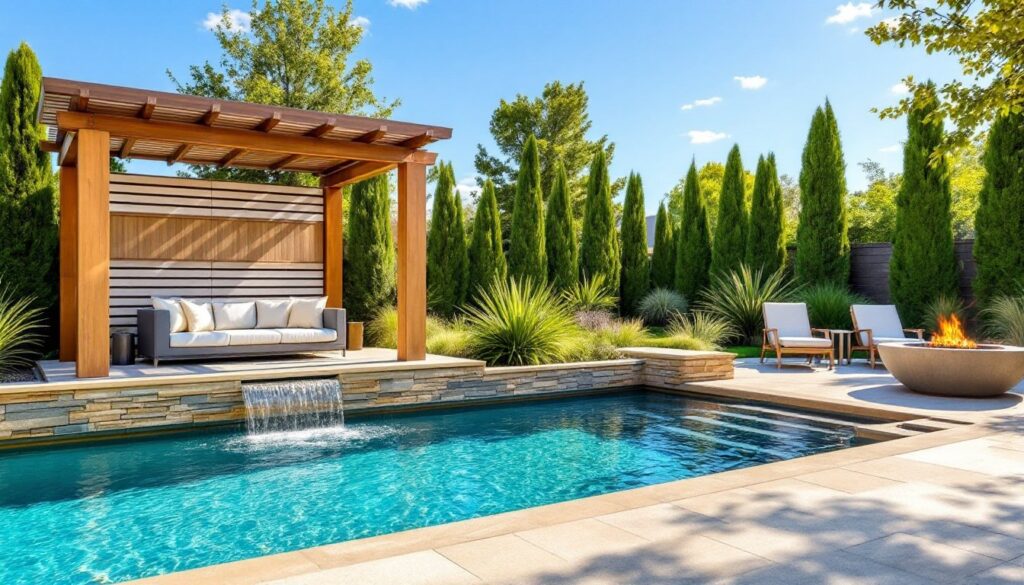
A 10×12-foot pergola provides enough coverage for a dining table and six chairs or a sectional sofa. Use pressure-treated 6×6 posts set in concrete footings below frost line (check local frost depth, typically 12-42 inches depending on region). Rafters should be 2×8 lumber spaced 16-24 inches on center for adequate shade and structural integrity. Add a retractable canopy or outdoor fabric panels for adjustable sun control.
Poured concrete pads under pergolas and seating areas prevent furniture from sinking into soil or gravel. A 4-inch thick slab over 4 inches of compacted gravel provides a stable base. Slope it 1/4 inch per foot away from the pool for drainage. Budget $8-$15 per square foot for basic concrete work.
Outdoor kitchens with built-in grills, refrigerators, and counters require dedicated electrical and gas lines. This is permit-required work in most jurisdictions. A basic setup with a grill island and counter runs $3,000-$8,000 depending on materials and appliances. Use stainless steel components rated for outdoor use, regular indoor appliances fail quickly from moisture exposure.
Place lounge furniture 8-10 feet from pool edges to create a dry zone where people can sit without getting splashed. Use quick-drying, mildew-resistant cushions designed for marine or outdoor use. Store them when not in use, even “weatherproof” fabrics degrade faster with constant UV and moisture exposure.
Water Features and Fire Elements for Visual Interest
Adding water features or fire elements creates focal points and extends the pool area’s visual appeal. Both require planning for utilities and safety.
Deck jets shoot arcs of water into the pool from deck level. They’re plumbed into the pool’s circulation system during construction or added during renovation with dedicated return lines. Expect $200-$400 per jet installed, plus plumbing labor. They create movement and sound without the maintenance of a separate fountain.
Sheer descent waterfalls (water sheets flowing from a raised wall or spa into the pool) add a modern, architectural element. These require structural support since the raised water source, often a spa or raised bond beam, adds significant weight. This is engineered work, not a DIY project. Budget $1,500-$5,000 depending on width and complexity.
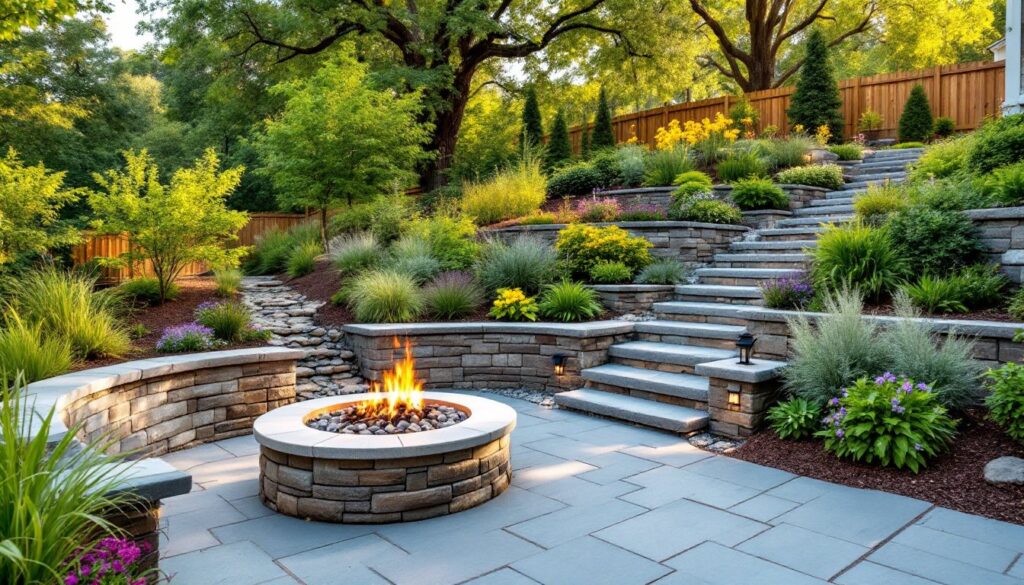
Fire pits and fire bowls provide warmth and ambiance for evening use. Gas models are cleaner and easier to control than wood-burning versions. Install them 15-20 feet minimum from the pool to prevent ash or sparks from contaminating water. They need a non-combustible base (concrete pad or pavers over gravel) and proper gas line installation per local codes. Propane tank installations are DIY-friendly: natural gas lines require a licensed plumber or gas fitter.
Fire and water bowls combine both elements, a gas flame surrounded by water spillover. They work well as standalone features between the pool and seating areas. Most are self-contained units requiring only a gas connection and GFCI-protected electrical for the water pump.
Never position fire features under low tree branches or pergola structures. Maintain 10 feet vertical clearance minimum and check local fire codes, some areas restrict open flames during dry seasons or require permits for permanent installations.