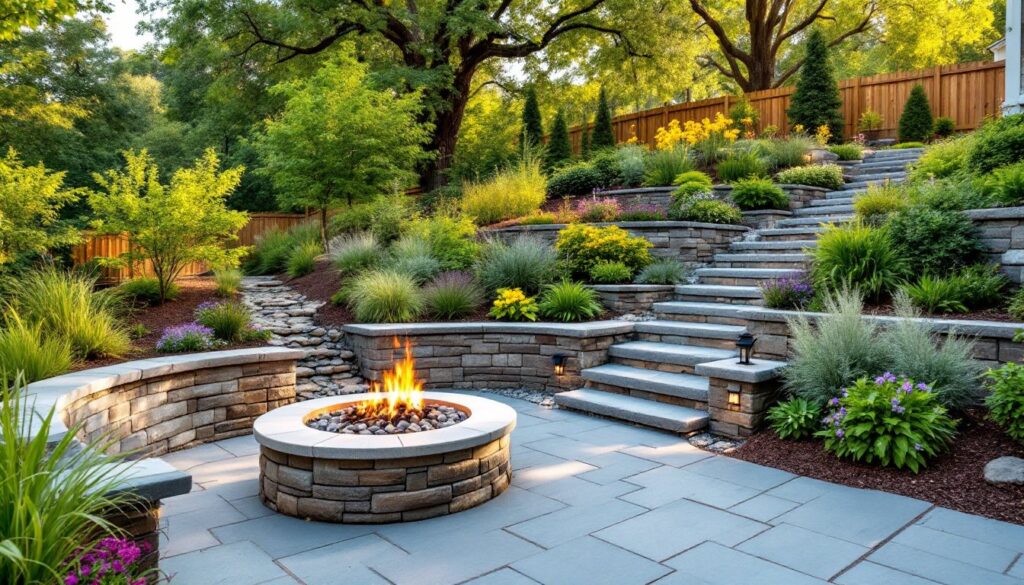
Most homeowners see a sloped backyard as a problem. It’s hard to mow, tough to plant, and impossible to use for anything practical. But a hillside lot is actually prime real estate for creating standout outdoor spaces that flat yards can’t match. Slopes offer natural drainage, built-in elevation changes for visual interest, and opportunities to carve out distinct zones without fencing or walls. The key is working with the grade instead of fighting it. This guide covers proven strategies for terracing, planting, and building on slopes, with pictures that show how each approach plays out in real installations.
Table of Contents
ToggleKey Takeaways
- Sloped backyard landscaping ideas transform hillsides into design advantages by providing natural drainage, elevation changes for visual interest, and opportunities to create distinct zones without additional walls or fencing.
- Terraced garden designs convert slopes into usable flat zones with retaining walls or timber edges, using tiers of 18–24 inches tall with at least 4–6 feet of usable space to create rhythm and multiple visual focal points.
- Proper drainage is essential for retaining walls, especially those over 3 feet; most jurisdictions require permits, engineer-stamped plans, gravel backfill, and perforated drain pipe to prevent water pressure failure.
- Natural stone steps and pathways with 12–16 inch treads and 6–7 inch rises provide safe, low-maintenance access; deep treads feel more comfortable and prevent erosion better than shallow steps on steep grades.
- Low-maintenance plantings featuring deep-rooted shrubs like junipers and native ground covers prevent erosion while minimizing watering and fertilizer needs, with staggered planting grids covering slopes faster than rows.
- Sloped terrain patios and decks are achievable through cut-and-fill grading or raised deck posts with proper footings and bracing; fire pits and semi-circular seat walls create natural amphitheater effects using the existing grade.
Why Sloped Backyards Are Hidden Landscaping Opportunities
Flat yards require deliberate design to create visual layers. Slopes come with those layers already in place. The grade gives homeowners a natural canvas for tiered gardens, cascading water features, and seating areas with views.
From a practical standpoint, slopes solve drainage issues that plague flat lots. Water moves away from the house naturally, reducing pooling and foundation concerns. That same grade also allows for creative hardscaping: stone steps that double as focal points, dry creek beds that channel runoff, and retaining walls that turn unusable hillsides into usable planting beds.
The challenge isn’t the slope itself, it’s erosion control and accessibility. Bare soil on a grade will wash away with the first heavy rain. Steep sections need stable pathways or steps. But once those fundamentals are addressed, a sloped yard outperforms flat ground for curb appeal and function. The elevation change creates microclimates, supports diverse plantings, and breaks up sight lines in ways that make even small lots feel expansive.
Terraced Garden Designs for Multi-Level Beauty
Terracing converts a slope into a series of flat, usable zones. Each level becomes a distinct planting bed, patio, or lawn area, held in place by retaining walls or timber edges. This approach works on moderate to steep grades where a single continuous slope would be difficult to plant or maintain.
The layout starts with establishing the number of tiers. A good rule of thumb: each terrace should be 18 to 24 inches tall with at least 4 to 6 feet of usable flat space behind it. Taller walls require engineered footings and drainage systems. Shorter walls (under 3 feet) can often be built with stacked stone, timber, or modular block without a permit, though local codes vary.
Pictures of terraced yards show a common design principle: alternating heights and widths create rhythm. A wide lower tier for seating, a narrow mid-tier for perennials, and a taller back tier for privacy shrubs give the eye multiple stopping points. The walls themselves become design elements when built with natural stone, decorative block, or reclaimed timber.
Building Retaining Walls That Combine Function and Style
Retaining walls do two jobs: they hold back soil and they define space. For terraced slopes, the wall material sets the tone. Dry-stacked stone looks organic and ages well, but requires skill to build stable corners. Concrete retaining blocks with interlocking lips are beginner-friendly and rated for specific heights, check the manufacturer’s load chart.
For walls over 3 feet tall, most jurisdictions require a permit and engineer-stamped plans. These walls need gravel backfill, perforated drain pipe at the base, and geogrid reinforcement tied into the hillside. Skipping drainage is the most common mistake: water pressure behind a wall causes tilting and failure within a season.
Timber walls using 6×6 treated posts and landscape timbers work well for informal gardens. Anchor the first course below grade, drill and pin each layer with rebar stakes, and step back each course slightly (about 1 inch per foot of height) for stability. Timber walls have a shorter lifespan than stone or block, expect 10 to 15 years in wet climates, but they’re fast to install and blend into wooded settings.
Natural Stone Steps and Pathways for Sloped Yards
Steps make a slope accessible and safe. The best hillside steps feel like part of the landscape, not an afterthought. Natural stone treads, bluestone, flagstone, or sandstone, set into the grade with gravel or crushed stone bases create durable, low-maintenance pathways.
For a gentle slope (less than 15 degrees), a meandering path with shallow steps works. Each tread should be at least 12 inches deep and rise no more than 6 to 7 inches per step. Deeper treads (14 to 16 inches) feel more comfortable and accommodate slower walkers or wheelbarrows. On steeper grades, switchback paths reduce the climb and prevent erosion along a single straight run.
Pictures of well-built stone steps show compacted gravel underneath each tread and stone dust or crushed granite swept into joints. This base prevents shifting and allows drainage. Avoid setting stones directly on soil, they’ll settle unevenly after freeze-thaw cycles.
For informal gardens, log or timber steps work. Anchor 6×6 or 8×8 landscape timbers into the slope with rebar stakes driven through pre-drilled holes. Backfill behind each timber with gravel to prevent washout. This method is faster than stone and blends into naturalized plantings, but the wood will eventually rot and need replacement.
Lighting is a safety must. Low-voltage LED path lights along steps prevent trips after dark. Surface-mount fixtures on retaining walls or solar stake lights flanking each tread both work, just avoid placing lights where they create glare or shadows that obscure the step edge.
Low-Maintenance Planting Strategies for Hillside Landscapes
Planting on a slope requires choosing species that tolerate dry conditions at the top, occasional wetness at the bottom, and everything in between. The goal is dense root systems that hold soil without constant watering or pruning.
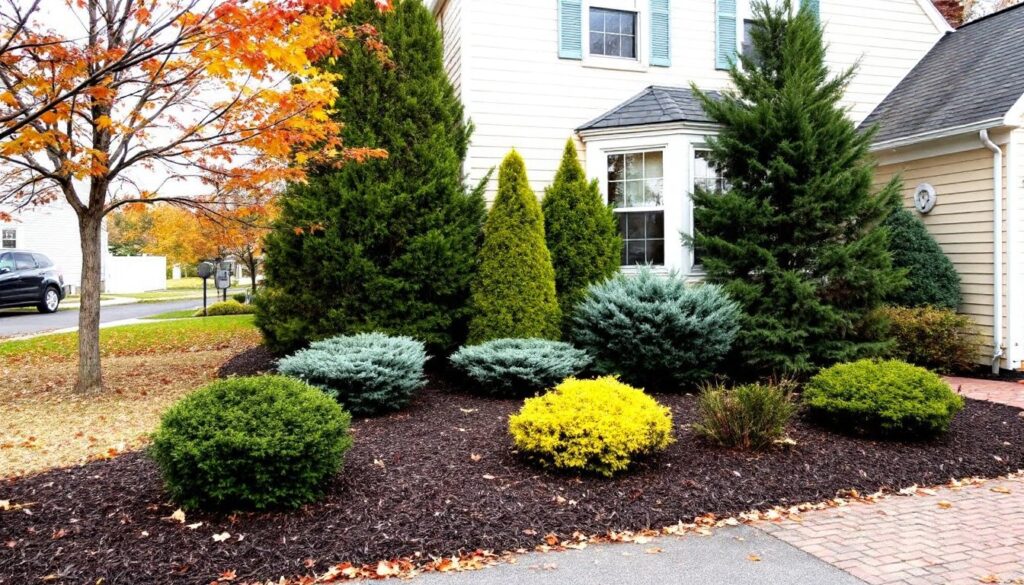
Shrubs with deep roots anchor slopes better than annuals. Junipers, cotoneaster, and dwarf conifers spread wide, need little water once established, and tolerate poor soil. For color, daylilies and ornamental grasses (like blue fescue or fountain grass) thrive on slopes and don’t require deadheading.
Avoid heavy feeders and water-dependent plants on hillsides. Runoff carries fertilizer and mulch downhill, making it hard to maintain consistent soil quality. Instead, amend planting holes individually with compost and use slow-release granular fertilizer sparingly.
Mulch is critical but tricky on slopes. Shredded bark or wood chips stay in place better than pine straw, which slides. Apply a 2- to 3-inch layer and edge beds with stone or timber to keep mulch from migrating. On steep grades, erosion-control blankets pinned over fresh plantings hold mulch and seed in place until roots establish.
Ground Covers and Native Plants That Prevent Erosion
Ground covers do the heavy lifting on slopes. They spread quickly, choke out weeds, and create a living mat that holds soil. Creeping juniper, periwinkle (vinca minor), and creeping phlox all root as they spread, locking in soil particles.
Native plants are ideal because they’re adapted to local rainfall and soil. In the Southeast, liriope and mondo grass handle shade and slopes. In the West, ceanothus and manzanita tolerate dry, rocky hillsides. Midwest slopes do well with prairie dropseed and little bluestem. Check with a local extension office for region-specific lists.
Plant ground covers in a staggered grid rather than rows. This covers the slope faster and prevents water from channeling between plants. Water new plantings with a soaker hose or drip irrigation on a timer, overhead sprinklers cause runoff before water soaks in.
Creating Outdoor Living Spaces on Sloped Terrain
A slope doesn’t mean giving up a patio or deck. It just means building a level platform into the hillside. The two main approaches are cut-and-fill grading (excavating into the slope and using the soil to build up the low side) or building a raised deck on posts.
Cut-and-fill patios using pavers or flagstone work on moderate slopes. Excavate the high side, level the base with compacted gravel, and build a short retaining wall on the low side to hold the grade. This creates a flat entertaining area without the cost of a deck. Use ¾-inch crushed stone for the base, compacted in 2-inch lifts, and top with 1 inch of stone dust to set pavers. Edge the low side with a wall or boulder border to define the space.
Raised decks on slopes require blocking and bracing between posts to handle lateral loads. Posts should sit on concrete footings below the frost line. Diagonal knee braces from posts to beams prevent racking. Most jurisdictions require permits and inspections for decks over 30 inches above grade, so check local rules before ordering lumber.
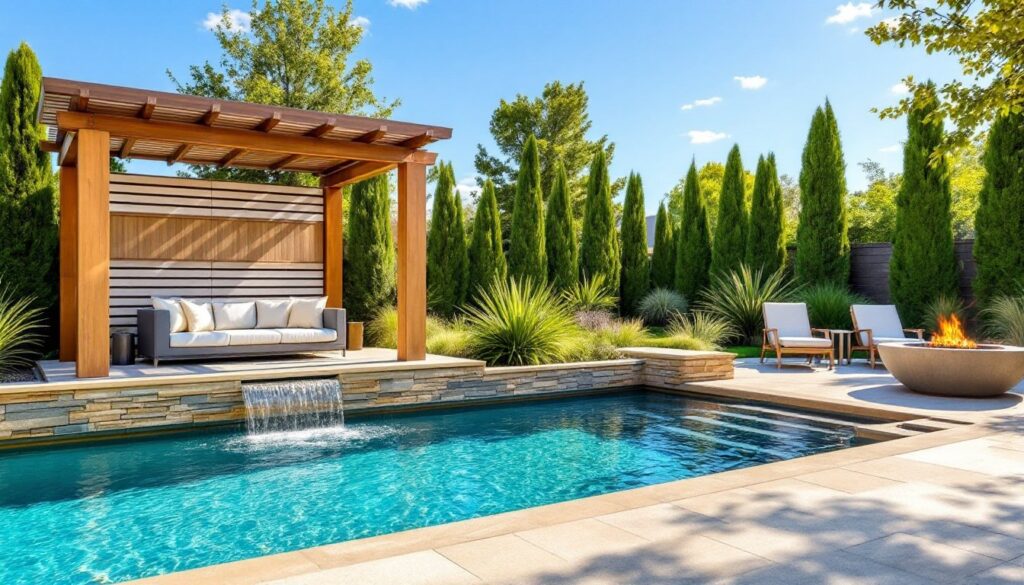
Fire pits and seating walls fit naturally into sloped yards. A semi-circular stone seat wall built into the hillside creates an amphitheater effect, with the fire pit at the low point. This design uses the slope for built-in seating and doesn’t require a flat pad.
Don’t forget access. Steps or a ramped path should connect the living space to the house and other yard areas. Handrails are required by code for steps with more than three risers in most areas, and they’re a smart safety addition even when not required.