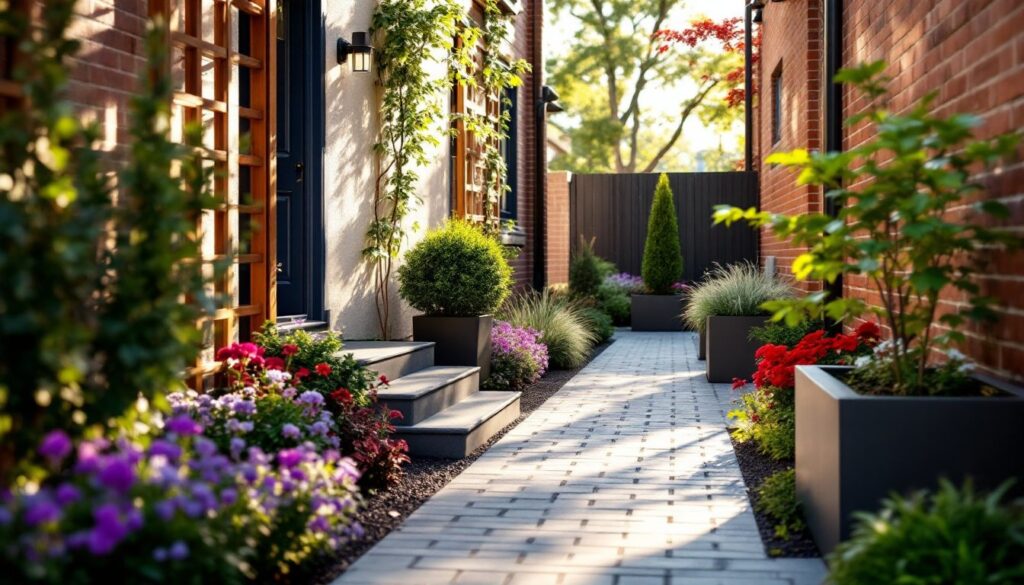
Townhouse front yards present a unique challenge: limited square footage, restrictive HOA rules, and high visibility from the street. But small doesn’t mean boring. With the right combination of vertical elements, hardscaping, and strategic plant choices, homeowners can turn a 6×10-foot strip of lawn into a functional, eye-catching landscape. The key is thinking in layers, up, not just out, and choosing features that deliver maximum impact with minimal maintenance. This guide breaks down practical strategies that work within townhouse constraints, from wall-mounted planters to permeable pavers.
Table of Contents
ToggleKey Takeaways
- Small townhouse front yard landscaping thrives when you prioritize vertical elements like trellises, wall-mounted planters, and espaliered trees rather than trying to expand horizontally across limited square footage.
- Drought-tolerant, low-maintenance plants such as boxwood, daylilies, and catmint eliminate the need for frequent watering and pruning while adapting well to the partial shade common in townhouse settings.
- Hardscaping features like permeable pavers, raised beds, and diagonal pathways add visual depth to narrow lots and create defined zones without requiring ongoing maintenance.
- Container gardens and portable landscaping solutions offer flexibility for HOA-restricted communities, allowing you to customize your townhouse front yard without violating community guidelines.
- Before breaking ground on any townhouse landscaping project, assess sun exposure throughout the day, review HOA covenants, and call 811 for utility locates to avoid costly mistakes.
- Layered planting heights, color repetition, and off-center focal points create the illusion of space and visual interest in small front yard areas.
Why Townhouse Front Yards Need Strategic Design
Most townhouse front yards measure between 50 and 150 square feet, roughly the size of a small bedroom. That footprint typically includes sidewalk access, utility access points, and HOA-mandated clearances. There’s no room for sprawling garden beds or meandering paths.
The primary constraints homeowners face include:
- Limited sunlight: Neighboring units, porches, and mature street trees often create shade for 4–6 hours daily
- Soil quality: Builder-grade fill dirt is common, often compacted and lacking organic matter
- HOA restrictions: Many communities regulate fence height, plant types, hardscape materials, and maximum coverage percentages
- Drainage issues: Grading often slopes toward foundations or sidewalks, creating wet spots
Before breaking ground, homeowners should review their HOA covenant, check for underground utilities (call 811 for free locate service), and assess sun exposure at different times of day. A yard that receives morning sun but afternoon shade requires different plantings than full-sun exposure.
The goal isn’t to mimic suburban landscaping on a smaller scale. It’s to create zones, entry, transition, and focal point, that guide the eye and serve a purpose, whether that’s privacy screening, seasonal color, or low-water sustainability.
Vertical Landscaping Solutions to Maximize Space
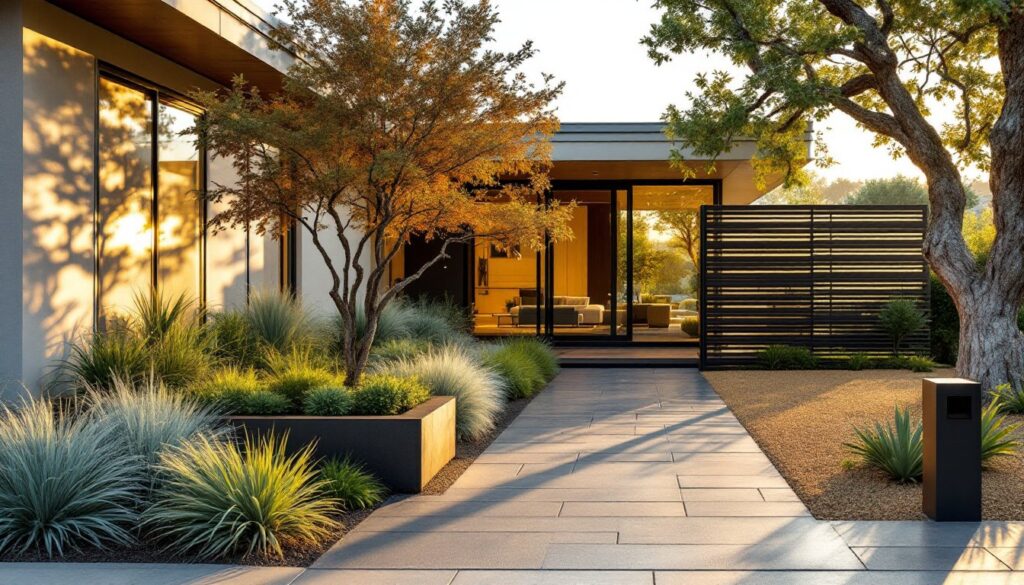
When ground space is tight, the best real estate is vertical. Wall-mounted planters, trellises, and espaliered trees add greenery without sacrificing walkway width or sightlines.
Trellis and Climbing Plants
A 6-foot cedar or vinyl trellis mounted to the front wall supports clematis, climbing hydrangea, or annual vines like morning glory. Trellises should be anchored into wall studs with lag screws (minimum 3-inch penetration) or attached to a freestanding frame if the HOA prohibits wall penetration. For partial shade, try climbing hydrangea (Hydrangea anomala petiolaris), which tolerates north-facing exposures.
Espalier Fruit Trees
Espalier, training tree branches to grow flat against a wall or fence, turns apple, pear, or fig trees into living architecture. Dwarf rootstocks (M26 for apples, Quince A for pears) keep mature height under 8 feet. Each tree requires a horizontal wire framework, typically galvanized steel wire at 12- to 18-inch intervals. Pruning twice a year maintains the flat profile.
Vertical Garden Panels
Modular pocket planters or felt wall systems allow for stacked herb gardens or succulent displays. These work best on walls that receive at least 4 hours of direct sun. Drip irrigation or hand-watering twice weekly is essential, vertical systems dry out faster than ground beds. Expect to replace potting mix annually as it compresses and loses drainage.
Low-Maintenance Plant Selections for Busy Homeowners
Townhouse landscapes benefit from drought-tolerant perennials and compact shrubs that don’t require weekly deadheading or seasonal swaps. The following plants thrive in small spaces and adapt to varying light conditions.
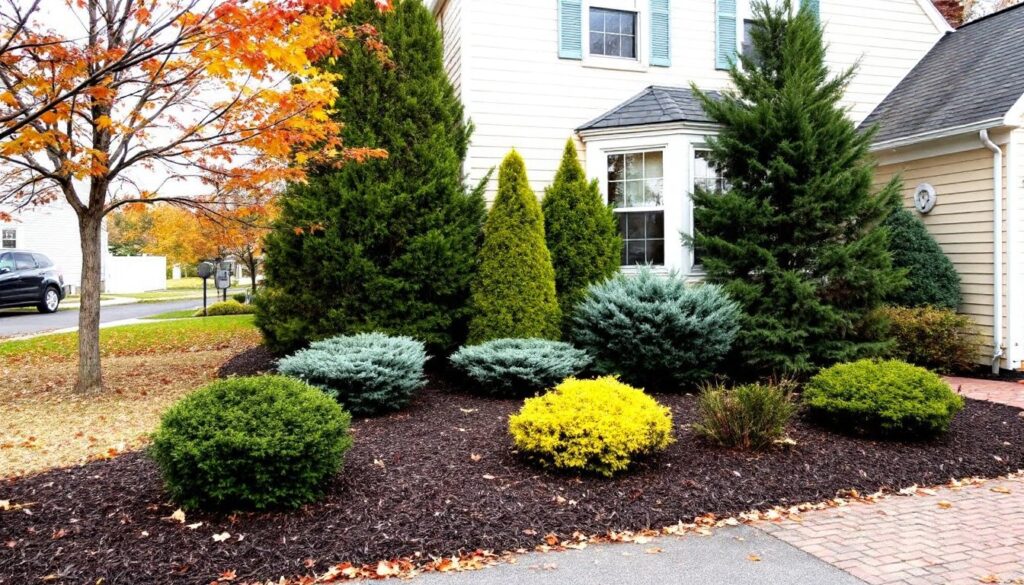
Evergreen Shrubs
- Boxwood (Buxus ‘Green Gem’ or ‘Green Velvet’): Stays under 3 feet, tolerates shearing, works in partial shade
- Dwarf hollies (Ilex ‘Soft Touch’ or ‘Carissa’): Dense, rounded form: no pruning needed
- Nandina (Nandina domestica ‘Firepower’): Compact variety with red winter foliage: deer-resistant
Perennials for Color
- Coral bells (Heuchera): Foliage ranges from lime to burgundy: thrives in shade to part sun
- Daylilies (Hemerocallis): Rebloomers like ‘Stella de Oro’ flower spring through fall: tolerates clay soil
- Catmint (Nepeta ‘Walker’s Low’): Lavender-blue blooms, drought-tolerant once established, attracts pollinators
Groundcovers as Lawn Alternatives
For areas under 100 square feet, consider replacing turf with:
- Creeping thyme (Thymus serpyllum): Tolerates light foot traffic, needs full sun
- Ajuga (Ajuga reptans): Spreads quickly in shade, purple or bronze foliage
- Sedum (Sedum spurium): Succulent groundcover for hot, dry spots
All these plants establish faster with 2–3 inches of shredded hardwood mulch, which retains moisture and suppresses weeds. Avoid volcano-mulching around stems, keep a 2-inch clearance to prevent rot.
Creating Visual Depth in Narrow Front Yards
Narrow lots, common in urban townhouse developments, benefit from design tricks that make spaces feel wider and more layered.
Diagonal Pathways and Borders
A brick or flagstone path laid diagonally across the yard creates the illusion of greater width. Instead of a straight shot from sidewalk to front door, angle the walkway 30–45 degrees. This adds visual interest and allows for planting beds on either side.
Layered Planting Heights
Arrange plants in tiers: groundcover in front, mid-height perennials (12–24 inches) in the middle, and a taller shrub or ornamental grass (3–4 feet) at the back. This “stair-step” approach draws the eye upward and creates the perception of depth. Avoid planting everything at the same height, which flattens the view.
Focal Point Placement
Place a sculptural element, ornamental tree, or large container off-center rather than dead-center. Asymmetry adds movement. A dwarf Japanese maple (Acer palmatum ‘Bloodgood’) or a textured ceramic urn filled with ornamental grasses pulls attention and anchors the composition.
Color Repetition
Repeat a signature color (deep purple, chartreuse, or silver foliage) in three spots across the yard. This creates rhythm without requiring a large plant palette. For example: purple heuchera near the door, purple salvia mid-yard, and a purple-leaf barberry at the corner.
Hardscaping Ideas That Add Function and Beauty
Hardscaping, patios, edging, and decorative stone, defines space and reduces the square footage requiring irrigation and mowing.
Permeable Pavers
Permeable pavers or gravel grids handle stormwater runoff better than solid concrete and often satisfy local stormwater ordinances. Products like Belgard Aqua-Bric or Turfstone allow grass or gravel to fill voids. Installation involves excavating 6–8 inches, laying a compacted gravel base, and setting pavers with polymeric sand or ground reinforcement grid. This is a weekend project for a 50-square-foot area but may require a plate compactor rental.
Metal or Stone Edging
Steel or aluminum edging (brands like Ryno or Permaloc) creates clean lines between planting beds and walkways. It installs with stakes every 3 feet and bends to follow curves. For a more rustic look, natural stone or brick edging works but requires a gravel trench and landscape adhesive to prevent shifting.
Raised Bed Borders
A 12- to 18-inch raised bed along the front wall or property line adds dimension and solves drainage problems. Build frames from pressure-treated 2×12 lumber (actual dimensions 1.5×11.25 inches) or composite decking. Secure corners with galvanized brackets or Simpson Strong-Tie connectors. Fill with a 50/50 mix of topsoil and compost.
Lighting Integration
Low-voltage LED path lights (12-volt systems) highlight hardscape edges and plant features. Transformers should be GFCI-protected and rated for outdoor use. Stake lights every 6–8 feet along pathways, and use 3-watt LED spotlights to uplight trees or wall features. Most systems wire together with quick-connect clips, no electrician required unless tying into household circuits.
Container Gardens and Portable Landscaping Features
Containers offer flexibility, especially for renters or homeowners in HOA communities with strict plant lists.
Choosing the Right Container
Look for pots with drainage holes and a minimum diameter of 12 inches for perennials, 16–20 inches for shrubs or small trees. Materials include:
- Resin or fiberglass: Lightweight, frost-resistant, good for moving seasonally
- Glazed ceramic: Heavy but insulates roots: requires winter protection in zones 6 and colder
- Terracotta: Breathable but porous, dries out faster and cracks in freeze-thaw cycles
Container Plant Ideas
- Dwarf conifers: Blue Star juniper or dwarf Alberta spruce stay compact and provide year-round structure
- Ornamental grasses: Fountain grass (Pennisetum alopecuroides) or blue fescue for texture
- Seasonal annuals: Swap petunias in summer for mums in fall, pansies in late winter
Soil and Watering
Use potting mix, not garden soil, potting mix drains better and resists compaction. Top-dress containers with slow-release granular fertilizer (14-14-14 or similar) in spring. Self-watering containers with built-in reservoirs reduce watering frequency to twice a week in hot weather.
Portable Trellises and Screens
Freestanding trellises (no wall attachment needed) can support vining plants in containers. A 5-foot bamboo or metal obelisk inserted into a 16-inch pot of morning glory or sweet pea adds vertical interest and privacy. These move easily if the HOA complains or if homeowners relocate.
Conclusion
Small townhouse front yards reward strategic thinking. Prioritize vertical elements, drought-tolerant plants, and hardscaping that defines zones without crowding pathways. Start with one focal feature, a container, a trellis, or a diagonal path, and build around it. Most projects require basic hand tools, a weekend, and willingness to measure twice. The results deliver curb appeal that outperforms square footage.