Small palm trees bring architectural drama to front yards without overwhelming limited space or blocking sightlines. Unlike sprawling landscape palms that can hit 40 feet or more, compact varieties stay manageable, typically under 10 to 15 feet, making them ideal for residential entryways, foundation plantings, and accent zones. They deliver instant curb appeal, work year-round in warm climates (USDA zones 8–11), and require less maintenance than most broadleaf shrubs once established. Homeowners can integrate small palms into symmetrical designs, tropical layered beds, or stark modern schemes. The key is selecting the right species for the site’s sun exposure, drainage, and frost tolerance, then pairing them with complementary groundcovers, hardscape, and lighting to build cohesion.
Table of Contents
ToggleKey Takeaways
- Small palm trees bring architectural drama to front yards without overwhelming space, typically staying under 10-15 feet tall and requiring less maintenance than broadleaf shrubs once established.
- Select small palm tree varieties based on your climate zone and site conditions—Mediterranean Fan Palm for cold hardiness (zone 8), Pygmy Date Palm for tight spaces, and Lady Palm for shaded areas.
- Symmetrical entryway designs with paired palms flanking your front door create classic curb appeal; pair them with matching groundcover and low-voltage LED uplights for nighttime impact.
- Tropical layered planting with a small palm as the canopy anchor plus contrasting mid-layer plants and groundcovers adds visual interest while mimicking natural understory growth.
- Modern minimalist palm landscaping relies on strong geometry and high-contrast hardscape materials like granite gravel or steel edging to let statement palms stand out.
- Invest in proper soil preparation, drip irrigation on timers, and 6-inch spacing from trunks to prevent rot—most landscape failures trace back to shortcuts in groundwork.
Why Small Palm Trees Are Perfect for Front Yard Landscaping
Small palms offer vertical interest without the sprawl or root aggression of large shade trees. Their canopies stay narrow, so they won’t crack sidewalks or undermine foundation drains when planted at the recommended distance, usually 6 to 8 feet from structures for most dwarf varieties. Most species tolerate heat, reflected light from pavement, and moderate drought once roots establish, which usually takes one growing season.
From a design standpoint, palms read as exotic focal points. They anchor entryways, frame garage doors, or punctuate low-maintenance gravel beds. Because they don’t drop heavy leaf litter like deciduous trees, cleanup is minimal, mostly spent fronds every few months. That’s a real advantage for busy homeowners who want curb appeal without weekend pruning marathons.
Palm roots are fibrous rather than woody, so they’re less likely to heave pavement or clog sewer laterals. Still, verify mature spread before planting. A Pygmy Date Palm (Phoenix roebelenii) stays compact, while a Mediterranean Fan Palm (Chamaerops humilis) can send up multiple trunks and spread wider. Matching the species to the planting zone prevents costly mistakes, some palms handle brief freezes, others don’t.
Best Small Palm Tree Varieties for Front Yards
Pygmy Date Palm (Phoenix roebelenii) tops the list for tight spaces. It maxes out around 6 to 10 feet tall with a graceful arching canopy. Single-trunk forms work well flanking doorways: multi-trunk specimens add visual weight. It tolerates partial shade and prefers well-drained soil amended with compost. Hardy to zone 10: container-grow in colder zones and move indoors during frost.
Sago Palm (Cycas revoluta) isn’t technically a palm, it’s a cycad, but landscapers treat it like one. Slow-growing and sculptural, it reaches 3 to 5 feet over many years. The stiff, dark-green fronds add texture to modern or Japanese-inspired designs. It handles full sun to part shade and needs minimal water once mature. Hardy to zone 8B with protection.
Mediterranean Fan Palm (Chamaerops humilis) is the cold-hardiest true palm, surviving brief dips to 10°F in zone 8. It grows as a multi-trunked clump, 8 to 15 feet tall, with fan-shaped blue-green fronds. Excellent for Mediterranean, Spanish, or coastal themes. Prefers full sun and tolerates rocky, alkaline soils.
Lady Palm (Rhapis excelsa) thrives in shade, a rare trait among palms. It forms dense clumps 6 to 12 feet tall and works under eaves or near north-facing walls. The fine-textured foliage pairs well with ferns and hostas in tropical layered beds. Hardy to zone 9: protect from hard freezes.
Windmill Palm (Trachycarpus fortunei) handles cold down to 5°F (zone 7B), making it viable for transitional climates. Single trunk, 10 to 15 feet tall, topped with fan fronds. It adapts to clay or loam soils and tolerates urban pollution. Ideal for homeowners pushing climate-zone boundaries.
Symmetrical Entryway Design with Paired Palms
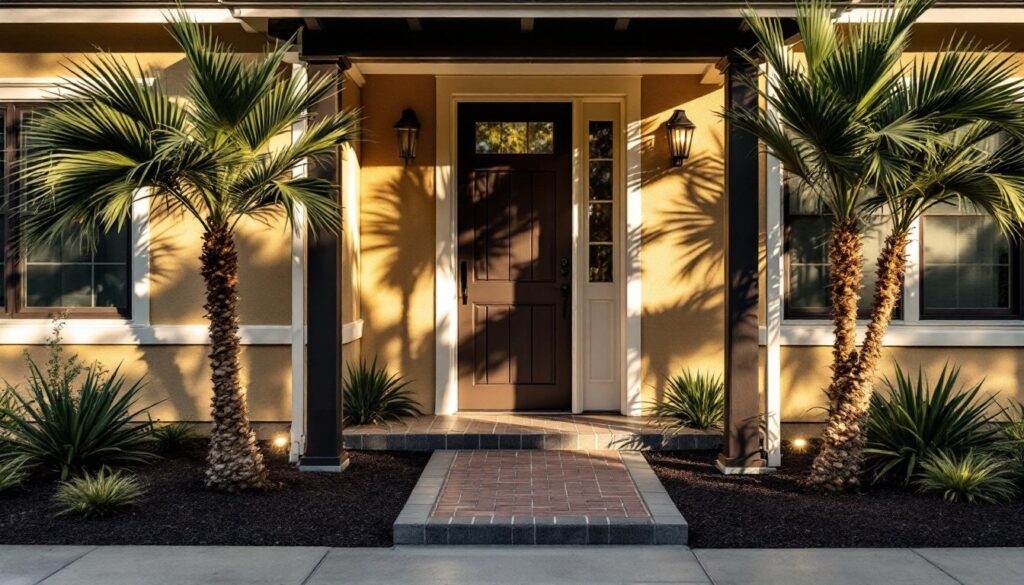
Flanking a front door with matching palms is a classic move that never reads as dated if executed with restraint. Choose two specimens of the same variety, similar trunk height, and canopy density. Plant them equidistant from the door, typically 4 to 6 feet on each side, to frame the entry without crowding the walkway.
Pygmy Date Palms and Sago Palms work well here because their compact crowns don’t block porch lighting or obscure house numbers. For a taller statement, use Mediterranean Fan Palms spaced 8 feet apart to accommodate their multi-trunk spread.
Underlayer the palms with matching groundcover: Asiatic jasmine, liriope, or blue fescue grass keeps the look clean. Edge the bed with steel or aluminum landscape edging for a sharp line: plastic edging warps over time. Add a 3-inch layer of hardwood mulch to suppress weeds and retain moisture, but keep mulch 6 inches away from the trunk to prevent rot.
Install low-voltage LED uplights (3-watt spots) at the base of each palm to highlight the trunk texture and canopy at night. Run 12-gauge landscape wire on a timer: bury conduit 6 inches deep to meet NEC guidelines in most jurisdictions. This simple lighting upgrade doubles nighttime curb appeal and improves safety along the walkway.
Tropical Garden Bed with Layered Planting
Layered planting mimics natural understory growth and packs visual interest into small footprints. Start with a small palm as the canopy anchor, Lady Palm or Pygmy Date Palm both tolerate partial shade. Position the palm toward the rear or center of the bed, depending on viewing angles.
Mid-layer plants should contrast in texture and color. Bromeliads, ti plants (Cordyline fruticosa), and elephant ears (Colocasia) deliver bold foliage. Space them 18 to 24 inches apart: they’ll fill in within one season in warm climates. For year-round interest in cooler zones (8–9), substitute evergreen carex grass or Japanese forest grass.
Groundcover ties the layers together. Creeping Jenny, mondo grass, or sweet potato vine spread quickly and suppress weeds. Avoid aggressive runners like English ivy, which can smother slower plants and creep into turf.
Amend soil before planting. Most tropical foliage prefers slightly acidic, well-drained media. Work in 2 to 3 inches of compost and coarse sand if drainage is poor. Heavy clay soils benefit from raised beds, build a 6- to 8-inch berm with landscape timbers or stacked stone.
Mulch with shredded cypress or pine bark to retain humidity and moderate soil temperature. Install drip irrigation on a timer (0.5 GPH emitters spaced 12 inches apart) to keep moisture consistent during establishment. Tropicals wilt fast in dry spells, and inconsistent watering causes leaf-tip burn.
Modern Minimalist Design with Statement Palms
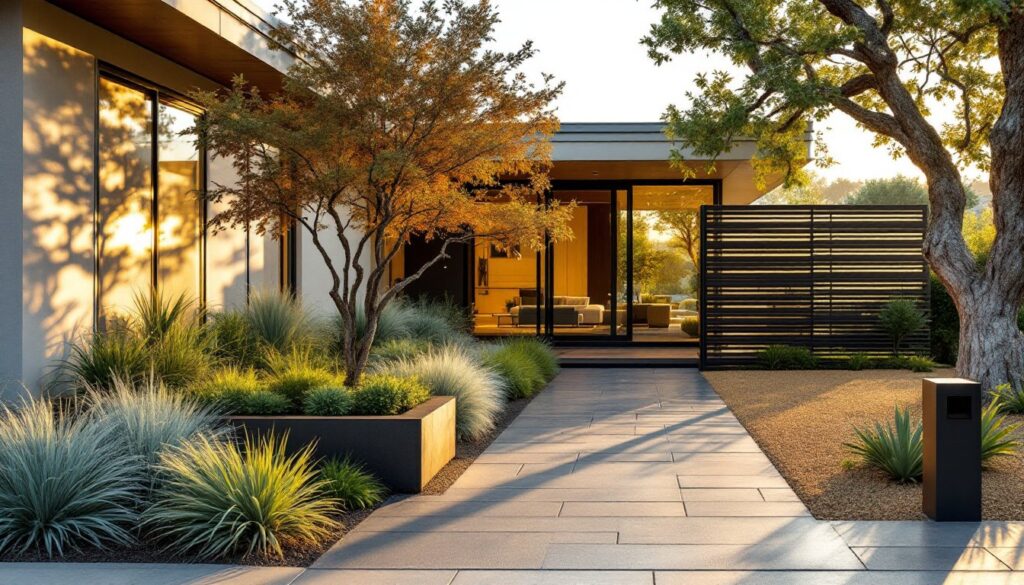
Modern landscaping strips away clutter and relies on strong geometry, limited plant palette, and high-contrast materials. A single Windmill Palm or trio of Sago Palms planted in a bed of white granite gravel or black lava rock makes an instant statement.
Define bed edges with 1/8-inch steel edging set flush with grade for a seamless transition to turf or pavement. Skip decorative borders, clean lines are the goal. Lay landscape fabric under the rock to block weeds: choose commercial-grade polypropylene, not bargain felt that degrades in UV.
Plant spacing should feel deliberate. If using three Sago Palms, arrange them in an asymmetrical triangle with 4- to 5-foot spacing between trunks. Odd numbers (1, 3, 5) create visual tension that feels intentional, not accidental.
Add a corten steel planter or geometric concrete pot for a second layer of interest. Plant a clumping grass like blue oat grass or black mondo grass to echo the palm’s texture at a smaller scale. Keep the hardscape proportion high, at least 60% rock or pavement to 40% planted area, to maintain the minimalist vibe.
Lighting here should be directional and crisp. Use narrow-beam LED spots (15° to 25° beam spread) mounted low to graze the trunk and cast dramatic shadows on adjacent walls. Avoid flood-style fixtures that wash out detail. If the front yard includes a modern address marker or sculpture, light it separately to layer focal points.
Coastal-Inspired Front Yard with Palm Clusters
Coastal designs lean on windswept textures, salt-tolerant plants, and loose, naturalistic groupings. Cluster three to five Mediterranean Fan Palms in a single bed to simulate a beachside grove. Vary trunk heights slightly for a less formal look.
Surround the palms with drought-tolerant companions: ornamental grasses (muhly grass, fountain grass), succulents (agave, yucca), and seaside daisies. These species handle sandy soil, reflected heat, and occasional salt spray if the site is near the ocean.
Use crushed oyster shell or pea gravel as mulch for thematic consistency. Both drain fast and reflect light, which keeps the root zone cooler in summer. Avoid dark mulches like dyed wood chips, they trap heat and look out of place in coastal schemes.
Edge beds with weathered driftwood logs or stacked limestone for an organic boundary. No mortar needed: gravity and careful placement hold stones in place. If the site slopes, terrace with 6×6 pressure-treated timbers anchored with 24-inch rebar pins driven through predrilled holes.
Water deeply but infrequently to encourage deep rooting. Most coastal plants tolerate dry conditions once established. Install bubbler emitters at the base of each palm (2 GPH flow rate) and run the system twice weekly during the first growing season, then dial back to weekly or as-needed. Overwatering in sandy soil leaches nutrients and promotes fungal issues.
Conclusion
Small palm trees deliver outsized impact in front yards when matched to climate, sited correctly, and paired with thoughtful hardscape and companion plants. Whether the goal is symmetrical formality, lush tropical layers, stark modern geometry, or breezy coastal character, the right palm variety and design framework make it achievable. Invest time in soil prep, irrigation setup, and proper spacing, most landscape failures trace back to shortcuts in the groundwork. Done right, a small palm planting anchors curb appeal for years with minimal upkeep.