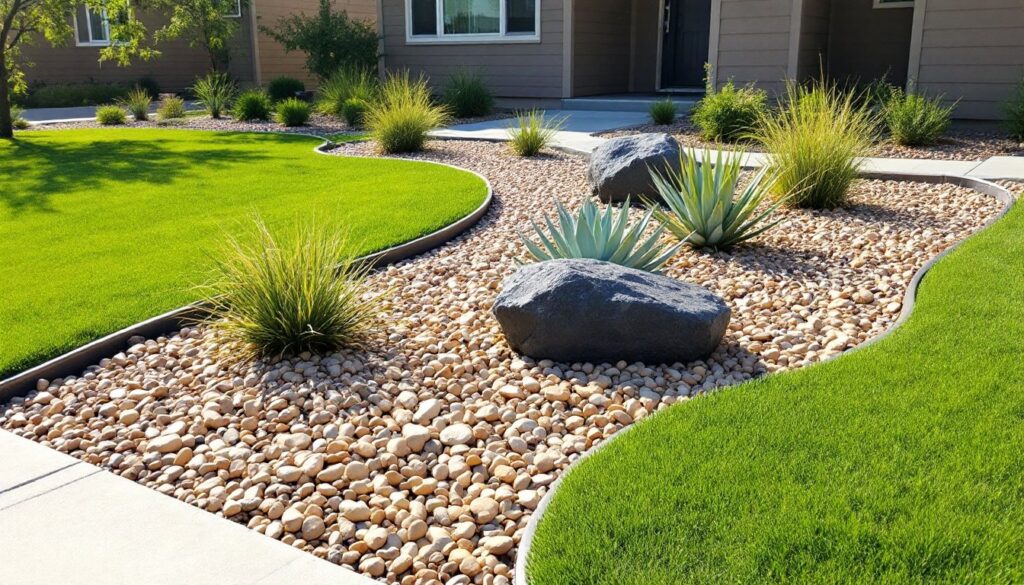
River rock landscaping offers homeowners a durable, low-maintenance alternative to traditional mulch beds and turf grass. These smooth, water-worn stones come in sizes ranging from 1-inch pebbles to 6-inch boulders, and their neutral tones blend seamlessly with most architectural styles. Unlike organic ground covers that decompose and require annual replacement, river rock can last decades with minimal upkeep. It’s particularly valuable in areas with water restrictions, poor soil drainage, or high foot traffic where grass struggles to survive.
Table of Contents
ToggleKey Takeaways
- Front yard river rock landscaping is a durable, one-time investment that lasts decades with minimal upkeep compared to mulch that requires annual replacement every 1–2 years.
- Proper installation on commercial-grade landscape fabric with secure edging is essential to prevent weed breakthrough, stone settling, and fabric damage.
- River rock excels at drainage management and weed suppression, making it ideal for properties with poor soil drainage, water restrictions, or high foot traffic areas.
- Design versatility includes clean borders, dry creek beds for drainage solutions, and pathways using contrasting stone sizes to add visual interest and function.
- Maintenance is minimal—mainly hand-pulling occasional weeds, removing debris with a leaf blower, and top-dressing thin areas every 5–7 years in high-traffic zones.
- River rock absorbs and radiates heat, so pair it with drought-tolerant plants like yucca, agave, or ornamental grasses in hot climates to prevent plant stress.
What Is River Rock Landscaping and Why Choose It for Your Front Yard?
River rock refers to smooth, rounded stones naturally shaped by water erosion over thousands of years. In landscaping applications, these stones typically range from ¾-inch to 6-inch diameter and come in colors from white and tan to charcoal gray.
The appeal goes beyond aesthetics. River rock provides effective weed suppression when installed over landscape fabric, reducing the need for herbicides and constant weeding. It doesn’t attract termites or harbor mold like wood mulch can, making it a practical choice near foundations.
From a practical standpoint, river rock excels in drainage management. Water flows freely through the stones rather than pooling on the surface, which helps prevent soil erosion and foundation moisture issues. This makes it ideal for properties with clay soil or grading challenges.
Homeowners also appreciate the permanence. While organic mulch needs replenishing every 1-2 years at roughly $30-50 per cubic yard delivered, river rock is a one-time investment. Depending on stone size and regional availability, expect to pay $40-150 per ton or $75-250 per cubic yard. Smaller decorative river rock costs more per pound than larger utility-grade stone.
One consideration: river rock absorbs and radiates heat. In southern climates or against west-facing walls, it can raise ambient temperatures by 5-10°F, potentially stressing nearby plants. Pairing rock beds with drought-tolerant species like yucca, agave, or ornamental grasses creates a cohesive, resilient landscape.
Popular Front Yard River Rock Design Ideas
River Rock Borders and Pathway Edging
Defining planting beds with 2-4 inch river rock borders creates clean visual separation between turf, hardscapes, and ornamental areas. The stones act as a mow strip, eliminating the need for constant edge trimming.
For pathway edging, homeowners often use contrasting stone sizes: a 3-foot-wide pathway of ¾-inch pea gravel flanked by borders of 3-5 inch river rock creates dimensional interest. Installing steel, aluminum, or heavy-duty plastic edging (staked every 3-4 feet) keeps the rock contained and prevents migration into adjacent lawn areas.
Another effective approach layers rock sizes. A 6-inch bed of 1-2 inch river rock sits inside a border of larger 4-6 inch stones, creating terraced texture. This works particularly well around specimen trees, where the rock ring extends to the drip line and protects roots from mower damage.
Dry Creek Beds and Drainage Solutions
Dry creek beds solve functional drainage problems while adding architectural interest. These features mimic natural stream channels, directing runoff from downspouts, sloped driveways, or hardscaped areas toward street drainage or dry wells.
Proper installation requires grading a shallow swale (typically 6-12 inches deep with gently sloped sides) along the drainage path. Line the excavated channel with landscape fabric, then place larger 6-8 inch river rock along the centerline to suggest a streambed. Fill the sides with 2-4 inch stones, and edge the banks with boulders or low-growing plants like creeping thyme or blue fescue.
For properties with significant runoff, a dry creek bed should connect to a functional drainage solution, either tying into a French drain system or terminating at a rain garden planted with water-tolerant species. Check local grading and drainage codes: some jurisdictions require permits for modifications that alter stormwater flow patterns.
The key to natural-looking creek beds is irregular curves and varied stone placement. Avoid perfectly straight lines or uniform rock distribution. Cluster larger boulders at outside bends where water would naturally erode, and use finer gravel on inside curves.
How to Install River Rock Landscaping in Your Front Yard
Proper installation prevents the most common river rock failures: fabric tearing, stone settling, and weed breakthrough.
Materials needed:
- River rock (calculate coverage: 1 ton typically covers 70-100 sq ft at 2-inch depth, depending on stone size)
- Commercial-grade landscape fabric (4-6 oz. per sq. yd., not lightweight weed barrier)
- Landscape staples or ground stakes (6-inch galvanized)
- Edge restraint (steel, aluminum, or poly bender board)
- Crushed stone base (optional, for high-traffic areas)
Tools:
- Flat shovel and garden rake
- Wheelbarrow
- Measuring tape
- Level
- Utility knife
- Safety glasses and work gloves
Installation steps:
-
Remove existing vegetation. Strip sod, pull weeds, and dig out roots. For persistent weeds like Bermuda grass or bindweed, consider applying a non-selective herbicide 7-10 days before installation (follow label instructions and keep pets clear during application).
-
Grade and level the area. The bed should slope slightly away from structures, minimum ¼ inch per foot, to direct water away from foundations. Use a 4-foot level and rake to check grade.
-
Install edging first. Secure metal or poly edging along bed perimeters with stakes driven every 3-4 feet. For curved beds, bender board flexes easier than rigid steel. The top edge should sit flush with surrounding grade or slightly below to hide it beneath the rock layer.
-
Lay landscape fabric. Roll out commercial-grade fabric, overlapping seams by 6-8 inches. Secure every 3-4 feet with landscape staples. Cut X-shaped slits for existing plants, keeping fabric snug around trunks. Don’t skip this step, fabric is the only thing preventing weeds from rooting through the rock.
-
Add a base layer (optional but recommended). For areas with foot traffic or vehicle crossings, spread 1-2 inches of ¾-inch crushed stone over the fabric before adding river rock. This base compacts and stabilizes the surface. It’s not necessary for decorative-only beds.
-
Spread river rock evenly. Aim for 2-3 inch depth for smaller stones (1-2 inches), or 3-4 inch depth for larger rock (3 inches and up). Pour from a wheelbarrow and distribute with a garden rake. Avoid walking directly on the fabric before rock is down, it tears easily.
-
Rake to level. Step back periodically to check for low spots or thin coverage. Add rock as needed.
One cubic yard covers roughly 100-120 square feet at 3-inch depth. Most suppliers deliver in ton or half-ton increments: have them dump on a tarp in the driveway for easier cleanup. Hauling rock in a wheelbarrow is labor-intensive, recruit help or work in stages to avoid fatigue injuries.
Maintaining Your River Rock Front Yard Landscape
River rock requires minimal upkeep compared to mulch or turf, but it’s not zero-maintenance.
Weed control: Even with fabric underneath, wind-blown seeds will eventually sprout on the rock surface. Hand-pull weeds when small, before roots penetrate the fabric. For persistent issues, apply a pre-emergent herbicide formulated for rock beds in early spring (products containing trifluralin or prodiamine work well). Avoid flame weeders, they can melt landscape fabric.
Debris removal: Leaves, twigs, and organic matter accumulate between stones. A leaf blower clears most surface debris quickly. For stubborn material, use a flexible rake (not a metal garden rake, which snags on fabric). Some homeowners use a shop vac for precision cleanup around plants.
Replenishing rock: Over years, smaller stones can settle into soil, migrate during heavy rain, or get displaced by foot traffic. Top-dress thin areas with fresh rock to maintain the 2-3 inch coverage depth. Expect to add 10-20% additional rock every 5-7 years in high-traffic zones.
Rinsing: In dusty climates or near unpaved roads, river rock can develop a gray film. An annual rinse with a garden hose restores the stone’s natural color. Use moderate pressure, high-pressure washers can displace smaller stones or tear fabric.
Addressing settling: If fabric becomes visible or rock shifts significantly, it usually indicates inadequate edging or fabric failure. Pull back rock in affected areas, repair or replace torn fabric, and reinforce edging before redistributing stones.
Seasonal considerations: Unlike mulch, river rock won’t blow away in windstorms or float during heavy rain (as long as edging is secure). It also won’t attract rodents or insects looking for nesting material, reducing pest-related maintenance.
Conclusion
River rock landscaping delivers lasting curb appeal with less ongoing effort than traditional plantings or mulch. The upfront investment in quality materials, commercial-grade fabric, solid edging, and properly graded installation, pays dividends in reduced maintenance and long-term durability. Done right, a river rock front yard can look sharp for decades with nothing more than occasional debris removal and minor touch-ups.