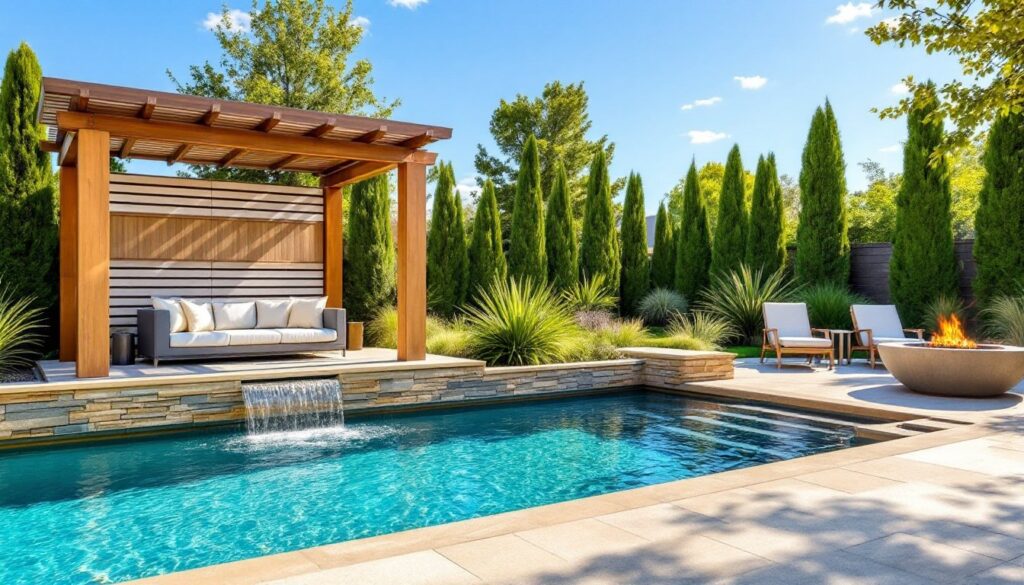
Most homeowners treat backyard corners like afterthoughts, dumping grounds for hoses, forgotten pots, or weeds that creep in where the fence meets. But these L-shaped zones are actually high-value real estate. Corners naturally draw the eye, create depth, and offer built-in boundaries that simplify design. Whether dealing with a tight 90-degree angle between two fence lines or a sprawling corner where lawn meets property edge, strategic landscaping turns dead space into focal points. The following ideas range from simple weekend projects to more involved installations, with options for every skill level, budget, and yard size.
Table of Contents
ToggleKey Takeaways
- Backyard corner landscaping transforms overlooked spaces into focal points that add visual depth and make yards feel larger and more intentional.
- Install layered planting designs with taller shrubs at the fence line, mid-height perennials in the middle, and ground covers in front to create a finished, natural appearance.
- Water features like fountains, spillways, and pondless waterfalls work especially well in corners because they naturally hide pumps and tubing while masking street noise.
- Create intimate seating retreats by pairing weather-resistant furniture with raised planter beds, privacy screens, and overhead pergolas anchored with proper concrete footings.
- Corner landscaping ideas range from simple gravel pads and climbing trellises to advanced living walls and custom water features, with options for every budget and skill level.
- Vertical gardens and modular planter systems maximize small yards by utilizing the wall space where two fences meet without reducing usable ground area.
Why Backyard Corners Deserve Special Attention
Corners present unique challenges and opportunities. Two perpendicular boundaries, whether fences, walls, or property lines, create natural enclosure. This makes corners ideal for intimate spaces that feel separate from the main yard without requiring additional screening.
From a design perspective, corners anchor compositions. A well-planted corner pulls the eye through the entire yard, creating visual depth. Empty corners, on the other hand, make yards feel unfinished or smaller than they are.
Practically, corners often suffer from drainage issues, shade from adjacent structures, or compacted soil from foot traffic along fence lines. Addressing these conditions upfront, adding French drains for persistent moisture, amending clay-heavy soil with compost, or selecting shade-tolerant plants, prevents failed plantings and wasted effort.
Corners also offer vertical real estate. With two walls meeting, installers can mount trellises, hang planters, or build upward without blocking sightlines across the yard. This three-dimensional approach maximizes square footage in smaller lots.
Cozy Corner Seating and Retreat Spaces
A corner naturally cradles seating. The two walls provide backing and a sense of enclosure without requiring a full pergola or pavilion.
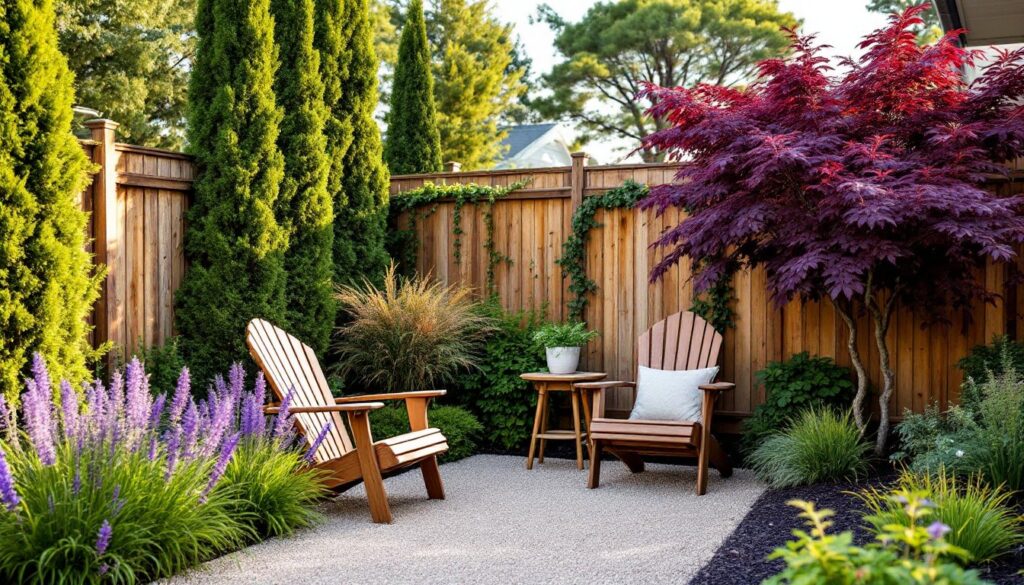
Basic setup: Place a weather-resistant bench or a pair of Adirondack chairs at a 90-degree angle. Add a small side table and outdoor lighting, solar path lights work, but low-voltage LED fixtures on a timer provide reliable illumination. For ground prep, lay paver base (crushed limestone) at 2–3 inches, compact it, then top with pea gravel or decomposed granite for a permeable, level surface. Skip concrete unless a permanent, all-weather pad is needed: gravel drains and shifts with freeze-thaw cycles.
Upgraded version: Frame the seating with raised planter beds built from 4×4 or 6×6 timber (cedar or pressure-treated pine rated for ground contact). Fill beds with a mix of ornamental grasses, lavender, and trailing rosemary for year-round texture. Install a privacy screen, either a store-bought lattice panel or a DIY frame with horizontal slats spaced 2–3 inches apart. Mount the screen into fence posts with galvanized brackets: don’t rely on screws into thin pickets.
Overhead shade: A simple corner pergola uses two 4×4 posts anchored in concrete footings (dig below frost line, typically 36 inches in northern climates, 12 inches in frost-free zones). Span the posts with 2×6 or 2×8 beams, then add 2×4 rafters on 16-inch centers. Drape with outdoor fabric, grow climbing vines (wisteria, clematis, honeysuckle), or install a retractable canopy. Check local codes, some jurisdictions require permits for structures over 120 square feet or attached to existing buildings.
Vertical Gardens and Living Walls for Corner Spaces
Vertical planting transforms corners without eating into usable yard space. Two perpendicular walls offer mounting options and create a wraparound effect.
Trellis and climbing plants: Mount galvanized wire mesh (4×4-inch or 2×4-inch openings) or welded wire fencing to fence rails using fence staples or zip ties. For masonry, use concrete anchors and furring strips to create a 1-inch air gap behind the mesh, improves airflow and prevents rot. Plant climbing roses, jasmine, or Boston ivy at the base. Space plants 18–24 inches apart and mulch with 2–3 inches of shredded bark to retain moisture.
Modular planter systems: Wall-mounted pocket planters (felt or rigid plastic) work for herbs, succulents, and shallow-rooted annuals. Install on fence boards using exterior-grade screws into studs or blocking. Each pocket holds roughly 1 quart of soil, so factor in frequent watering, drip irrigation on a timer saves labor. Alternatively, build a pallet planter: stand a heat-treated pallet (marked HT, not chemically treated) upright, staple landscape fabric to the back, fill slats with potting mix, and plant through the gaps. Lean it against the corner or secure with L-brackets.
Living walls (advanced): Modular systems with built-in reservoirs and wicking mats offer better moisture control. Expect to invest in a recirculating pump if the system exceeds 20 square feet. This crosses into landscaping contractor territory for most DIYers, but handy homeowners with drip irrigation experience can tackle it. Plan for electrical (GFCI-protected outlet) and seasonal maintenance, algae buildup and clogged emitters are common issues.
Water Features That Transform Awkward Corners
Corners naturally hide pumps, tubing, and reservoirs, making them ideal for water features. The sound masks street noise and the movement draws attention.
Container fountains: Use a glazed ceramic pot (20–24 inches diameter) or a whiskey barrel liner. Install a submersible pump (100–200 GPH for small features), run tubing up through river rock or stacked slate, and let water spill back into the reservoir. Bury the power cord in schedule 40 PVC conduit if running it across the yard: surface cords are trip hazards and deteriorate under UV. Plug into a GFCI outlet, required by NEC for outdoor water features.
Wall-mounted spillways: Attach a copper or resin scupper to the fence, feed it from a hidden reservoir below (a buried plastic basin or rubber stock tank), and cycle water with a pump. Line the catch basin with river rock to hide the mechanics. For freeze-prone climates, drain the system in late fall and store the pump indoors to prevent cracking.
Pondless waterfalls: Dig a trench along the corner, lay EPDM pond liner (45-mil thickness), and stack flagstone or boulders to create a cascading spillway. Water collects in a buried reservoir (a modular basin or a basin fashioned from a stock tank), then recirculates via pump. This setup requires a level foundation, use a 4-foot level and adjust stone placement carefully. Pondless designs eliminate standing water, reducing mosquito breeding and safety concerns around small children. Expect a full weekend for excavation, liner placement, and stone arrangement. Pumps rated 2,000+ GPH suit most backyard waterfalls: undersized pumps produce a trickle rather than a flow.
Layered Planting Designs for Depth and Interest
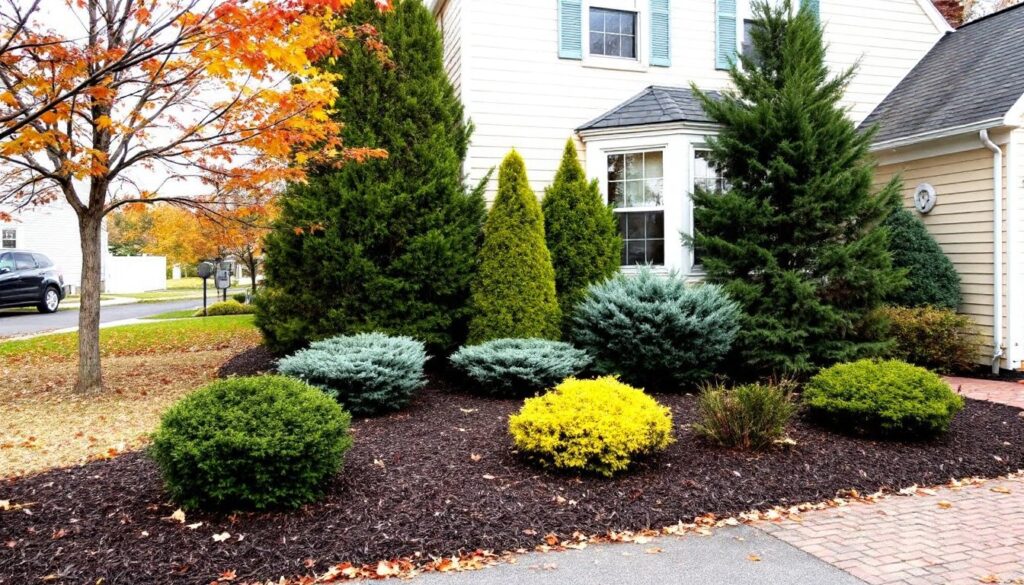
Layering, placing taller plants in back, mid-height in the middle, and ground covers in front, creates a finished look and prevents the “flat” appearance common in single-row plantings.
Back layer (fence line): Use evergreen shrubs for year-round structure: arborvitae, boxwood, or skip laurel reach 4–8 feet and tolerate partial shade. Space according to mature width (usually 3–4 feet on center). For faster privacy, plant closer and plan to thin later, but don’t crowd roots, it invites disease.
Mid layer: Ornamental grasses (fountain grass, feather reed grass), perennials (salvia, coneflower, Russian sage), and compact flowering shrubs (hydrangea, spirea) fill the 2–4-foot height range. Group in odd numbers (threes or fives) for a natural look. Amend soil with 2–3 inches of compost before planting: most perennials prefer well-drained soil.
Front layer: Low-growing ground covers and edging plants, creeping thyme, sedum, ajuga, or sweet woodruff, soften edges and suppress weeds. Mulch pathways between layers with shredded hardwood or pine bark (2–3 inches deep), keeping mulch pulled back 2 inches from plant stems to prevent crown rot.
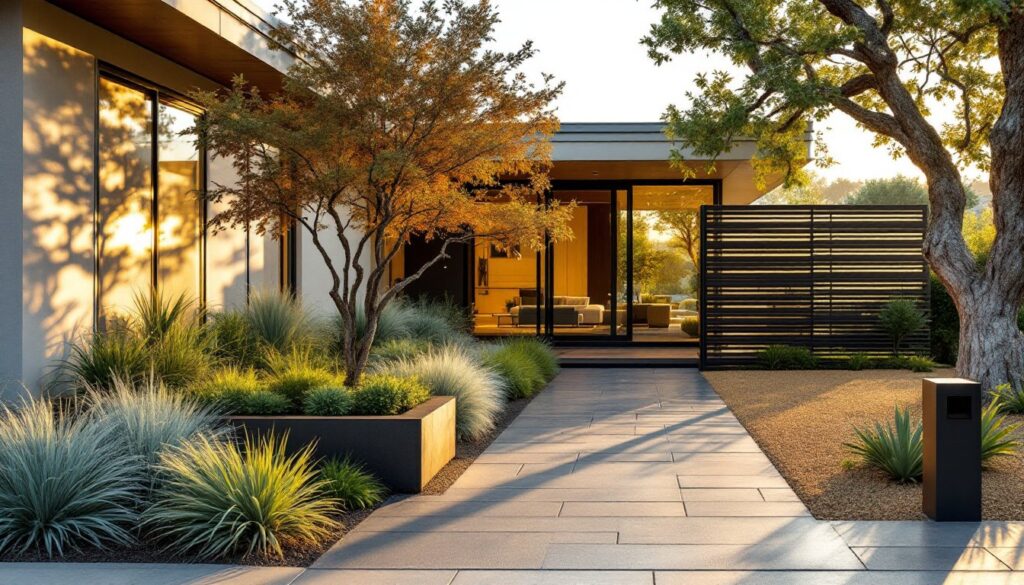
Corner focal point: Anchor the design with a specimen plant or decorative element, a Japanese maple, ornamental birch, large decorative urn, or vertical sculpture. Position it off-center (about two-thirds into the corner) rather than dead-center: it feels less static.
Irrigation: Corners far from hose spigots benefit from drip irrigation. Run ½-inch poly tubing along the fence, branch off with ¼-inch spaghetti tubing to each plant, and install emitters (1–2 GPH per plant). Connect to a battery-operated timer at the spigot. This beats dragging hoses and ensures consistent watering during establishment (critical in the first two growing seasons).
Functional Corner Solutions: Storage, Compost, and Utility Screens
Not every corner needs to be ornamental. Tucking functional elements into corners keeps them accessible but out of sight.
Outdoor storage: Build a simple shed or storage box using ¾-inch plywood (exterior-grade or T1-11 siding), framed with 2×4s on 16-inch centers. A 4×4-foot footprint holds mowers, tools, or pool supplies. Raise the structure on 4×4 skids or concrete blocks to prevent ground contact and rot. Use galvanized hinges and a hasp with padlock for security. Roof with corrugated metal panels or asphalt shingles over ½-inch OSB sheathing. Slope the roof at least 3:12 pitch for drainage. Some municipalities classify sheds over 100 square feet as accessory structures requiring setback compliance or permits, check before building.
Compost bins: A three-bin system (each 3×3 feet) fits neatly into corners. Frame with 2×4s (cedar resists rot: pressure-treated works but avoid CCA-treated lumber near edibles), and use welded wire fencing or hardware cloth for sides. Leave the front open or use removable slats for easy access. Position on bare soil to allow drainage and worm access. Add a simple roof from leftover plywood to shed rain and keep the pile from waterlogging.
Utility screens: Hide air conditioning units, pool equipment, or trash bins with a three-sided enclosure. Build frames from 2×4s, infill with horizontal slat fencing, lattice panels, or corrugated metal. Leave 12–18 inches clearance around AC units for airflow per manufacturer specs, restricted airflow kills efficiency. Anchor frames to concrete pads with wedge anchors or Simpson Strong-Tie post bases. For a softer look, plant fast-growing shrubs (privet, photinia) in front of the screen, but don’t block access panels or drainage.
Conclusion
Backyard corners often sit ignored, but they’re among the most versatile spaces in a landscape. A weekend of work, whether installing a gravel seating pad, mounting a trellis, or stacking stone for a water feature, turns wasted square footage into a destination. Start with a clear purpose (seating, privacy, utility, or visual interest), prep the ground properly, and choose materials suited to the climate. The result is a yard that feels larger, more intentional, and genuinely finished.